
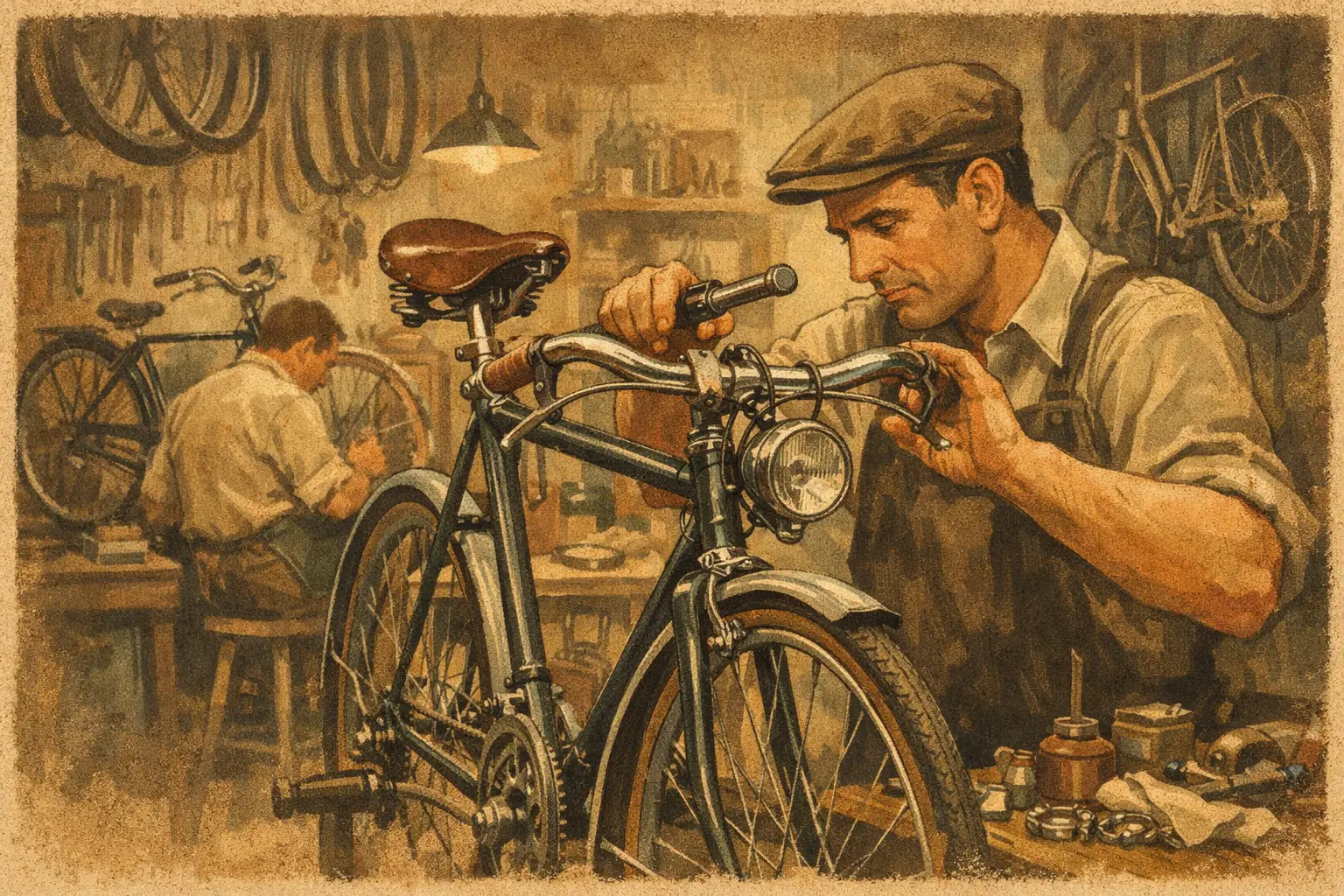
A classic bicycle restoration service is not a polish, a new saddle and a set of tyres. A proper restoration begins with a harder question: what does this bicycle need to be? A period-correct display machine, a dependable Sunday rider, a loaded touring bike or a fast, usable classic for modern roads all require different decisions.
That distinction matters because older bicycles often carry hidden problems beneath attractive paint and familiar components. Corrosion can sit inside a steel frame. A beautifully lugged fork may have been bent in an old impact. Chrome can conceal pitting around a handlebar clamp, while a hub that turns freely in the stand may be worn beyond sensible adjustment. The goal is to retain the machine’s character without asking a rider to accept avoidable risk, poor braking or unreliable shifting.
What a classic bicycle restoration service should achieve
The best restorations respect the original bicycle while being honest about its intended use. For a rare racing frame with historic value, originality may take priority over modern convenience. For a well-made touring or club bike that will cover real miles in British weather, durability, braking performance and parts availability often matter more than exact catalogue specification.
This is why restoration should be agreed as a project, not sold as a fixed package. Two apparently similar 1970s steel road bikes can require entirely different work. One may need a careful clean, conserved paintwork, fresh cables and correctly serviced hubs. The other may need frame alignment, replacement wheel rims, brake upgrades and a full rebuild after years in a damp shed.
A useful restoration gives the owner a clear understanding of what is original, what has been renewed, what has been upgraded and why. That mechanical transparency protects both the bicycle and its value.
Preserve, replace or improve?
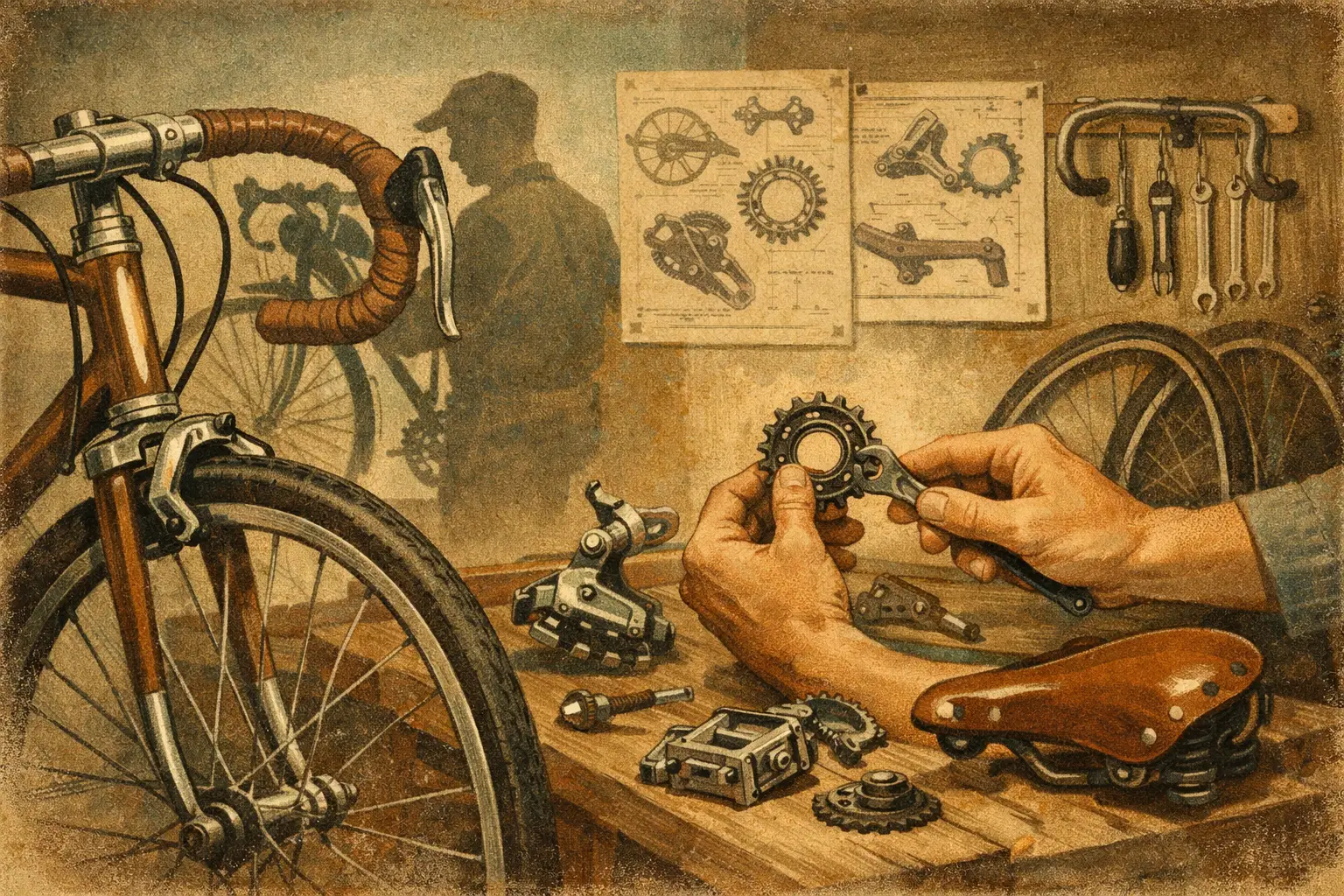
Every component deserves a judgement rather than an automatic replacement. Original alloy chainsets, friction shifters, hubs and calipers can often be rebuilt and used for many more years. In some cases, their finish and engineering are better than low-cost modern alternatives. But originality is not a reason to retain worn rims, cracked tyres, unsafe handlebars or heavily corroded fasteners.
Modern parts can also be fitted sensitively. Better brake blocks can transform stopping control without changing the appearance of period calipers. A modern chain and correctly selected freewheel can make a vintage drivetrain more dependable. New stainless spokes and quality rims may preserve the look of an original wheel while providing a far safer foundation for regular riding.
There is no universal rule. A museum-quality restoration and an endurance-ready classic should not be specified in the same way. The right approach depends on the bicycle, its history, the rider’s priorities and the miles it is expected to cover.
Start with the frame, fork and alignment
The frame is the project. Components can be sourced, serviced or substituted; a structurally compromised frame needs proper assessment before money is spent elsewhere.
A thorough inspection looks beyond obvious dents and cracked paint. Steel frames need checking around the bottom bracket shell, head tube, dropouts, bottle bosses and beneath cable clips, where moisture and corrosion can accumulate. Fork blades, crown, steerer and dropouts require particular attention because damage there affects handling and safety directly. Aluminium, titanium and carbon classics each need material-specific assessment rather than assumptions based on appearance.
Alignment is equally important. A bicycle can look straight while tracking poorly, wearing tyres unevenly or placing the wheels out of plane. Dropout alignment, fork alignment and rear triangle symmetry affect how the bike handles, shifts and brakes. Correcting a serviceable steel frame may be entirely reasonable. Trying to force damaged or fatigued material back into shape is not.
Where a crack, failed braze-on or fatigue issue is found, repair must address the cause. A replacement weld alone is not always enough. The load path, local wall thickness, prior damage, corrosion and any unsuitable modification need considering before a repair method is approved. This is where engineering-led diagnosis has real value: it avoids turning a visible crack into a repeatedly repaired weak point.
Wheels are usually the turning point
Many classic bicycles arrive with original wheels that look complete but are no longer suitable for regular use. Old alloy rims can have worn brake tracks, internal corrosion around spoke holes or damage from years of over-tightened spokes. Steel rims may be historically correct but offer limited wet-weather braking. Original spokes can be rusty, fatigued or unevenly tensioned, even if the wheel seems reasonably true.
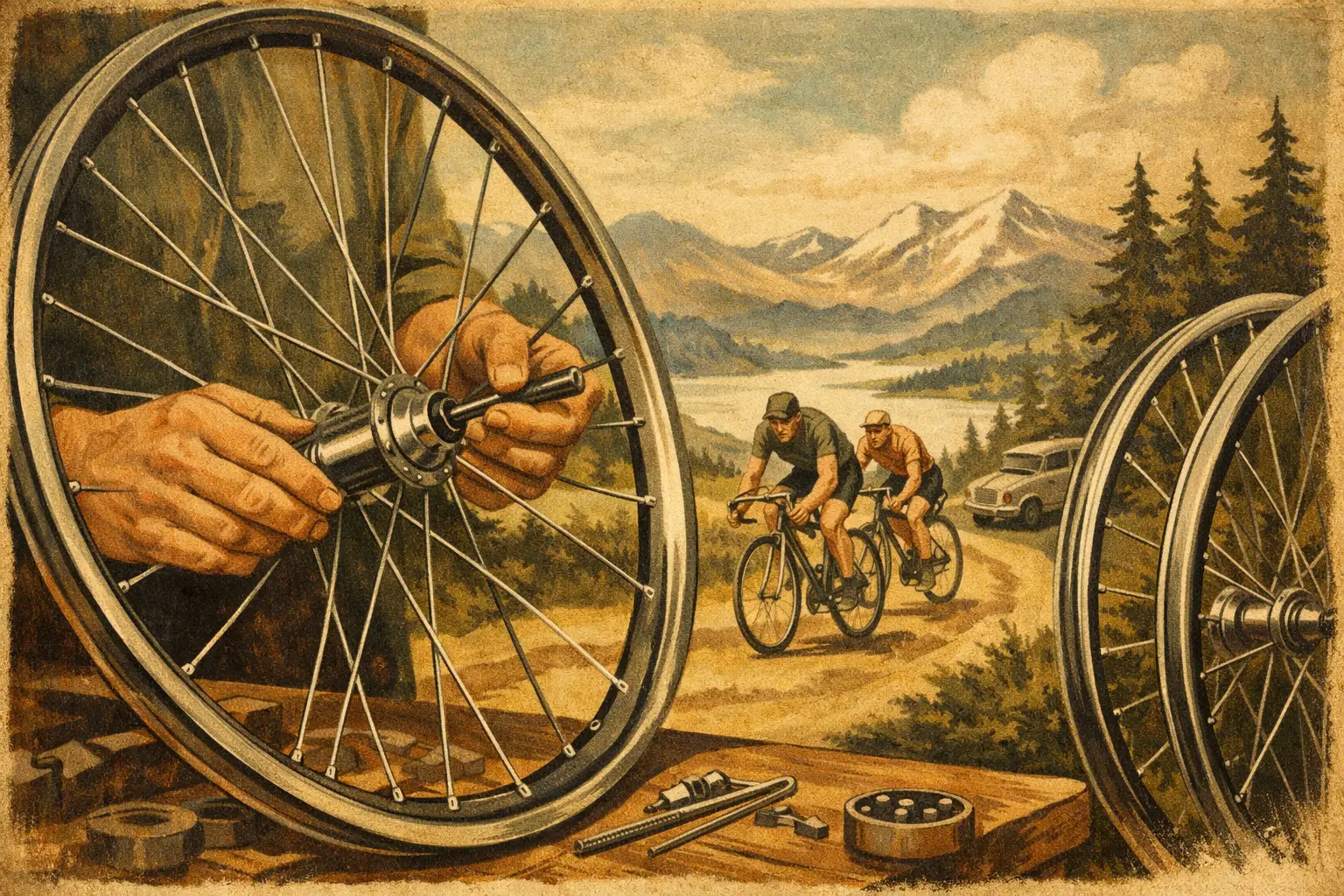
A full wheel assessment includes rim condition, hub shell integrity, bearing surfaces, axle threads, spoke tension, dish and trueness. Cup-and-cone hubs from established manufacturers are often well worth rebuilding with fresh bearings, grease and careful adjustment. If the rims are beyond use, rebuilding those hubs into suitable modern rims can retain much of the bicycle’s original identity while improving reliability and braking.
Tyre choice deserves the same thought. A wider, supple tyre at an appropriate pressure can make a classic road frame more comfortable and controllable on rough lanes. Clearance is the limit. It is never sensible to force a tyre that leaves inadequate space for mud, stones or a slightly untrue wheel.
Drivetrain and braking need real-world standards
A restoration that photographs well but skips under load, drags a brake or cannot stop confidently on a wet descent has failed its rider. Older drivetrains are often straightforward and durable, but they need careful compatibility checks. Chain pitch, freewheel condition, chainring wear, derailleur capacity and the condition of shifter pivots all affect whether original equipment can work properly.
Friction shifting can be precise and satisfying when the mechanism is clean, the cable run is correct and the drivetrain is not excessively worn. It also offers flexibility with gear combinations that indexed systems may not. However, a rider who wants effortless daily commuting or long-distance touring may prefer selected modern parts where they can be installed without compromising the frame or the bike’s character.
Brakes require an uncompromising view. Old calipers can often be restored, but pivots must be secure, springs balanced and mounting points sound. Lever pull, cable housing quality, rim surface and pad compound work as a system. A classic bike fitted with poor cables and hardened old blocks will not gain meaningful stopping performance merely because the calipers have been polished.
Finish work should follow the engineering
Paint, decals, plating and polished alloy are the visible rewards of restoration, but they should come after structural and mechanical decisions. Stripping a frame too early can remove useful evidence of old repairs, stress marks and corrosion. It can also turn a bicycle with honest patina into a costly cosmetic project before its rideability has been established.
Conserving original paint is often the right choice. A careful clean, treatment of surface corrosion, protection inside the frame and discreet touch-ins can retain the history that makes a classic bicycle appealing. Repainting makes sense when corrosion is extensive, previous paintwork is poor, repairs require refinishing or the owner wants a complete visual renewal. Quality preparation matters more than a fashionable colour.
The same restraint applies to accessories. Period mudguards, racks, pumps and lamps can make a restoration distinctive and practical, provided their mounts are sound and they do not create rubbing, rattles or corrosion traps. A bicycle intended for riding should be quiet, secure and easy to maintain, not merely authentic at a distance.
Build the bike around the rider
Classic geometry is not automatically comfortable, and a period-correct position is not always appropriate for the owner. Bars, stem length, saddle position, crank length and gearing should reflect the rider’s flexibility, strength, intended distance and terrain. A bicycle that once raced short road events may need lower gearing, more practical contact points and better tyre clearance for modern use.
This is particularly relevant for touring, gravel roads, commuting and riders returning to cycling after a long break. Small changes can make an old bicycle enjoyable rather than demanding. They should be reversible where possible, especially on a valuable frame.
A well-restored classic is not frozen in time. It is a bicycle with its original qualities understood, its weaknesses dealt with honestly and its equipment chosen for the life it will actually lead. At Ewhurst Bikes, that starts with a close inspection and a conversation about the bike you have, the bike you want to preserve and the roads you plan to ride. Book an appointment, bring the machine in, and give it the chance to earn its next thousand miles.

Leave A Comment