
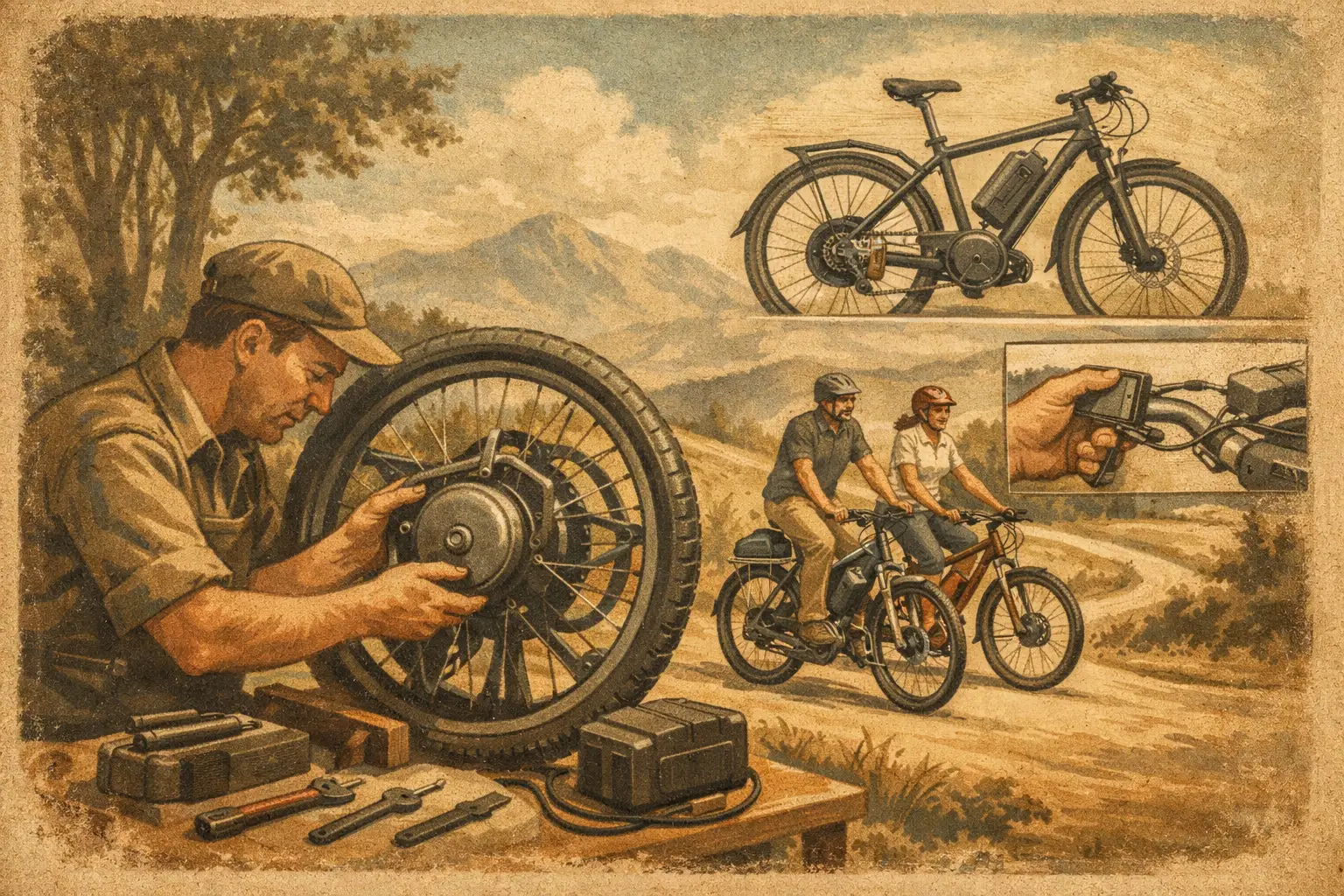
A good e-bike conversion fitting service starts before a motor kit is ordered. The deciding question is not simply whether a kit will physically fit your bike. It is whether the frame, wheels, brakes, transmission and intended use can safely carry and control the extra torque, mass and mileage.
A conversion can turn a trusted touring bike, commuter, cargo machine or adaptive cycle into equipment you will use far more often. Done badly, it can overload a tired wheel, compromise steering, shorten drivetrain life and leave a battery mounted where it is exposed or poorly supported. The difference is engineering-led assessment, careful installation and honest advice when a conversion is not the right answer.
What an e-bike conversion fitting service should assess
A motor and battery are only part of the system. Before fitting either, the workshop should establish what the bicycle is, what condition it is in and what work it will be expected to do. A lightweight road frame used for occasional assistance on rolling lanes has very different requirements from a steel expedition bike carrying panniers up Pennine gradients, or an electric handcycle used daily.
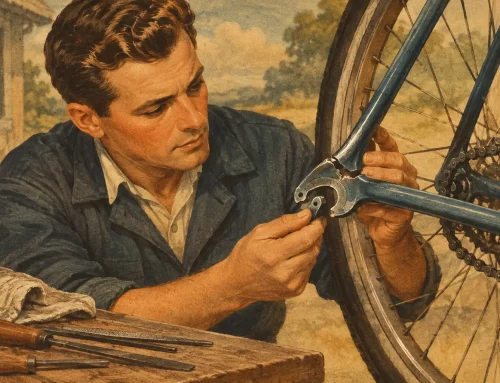
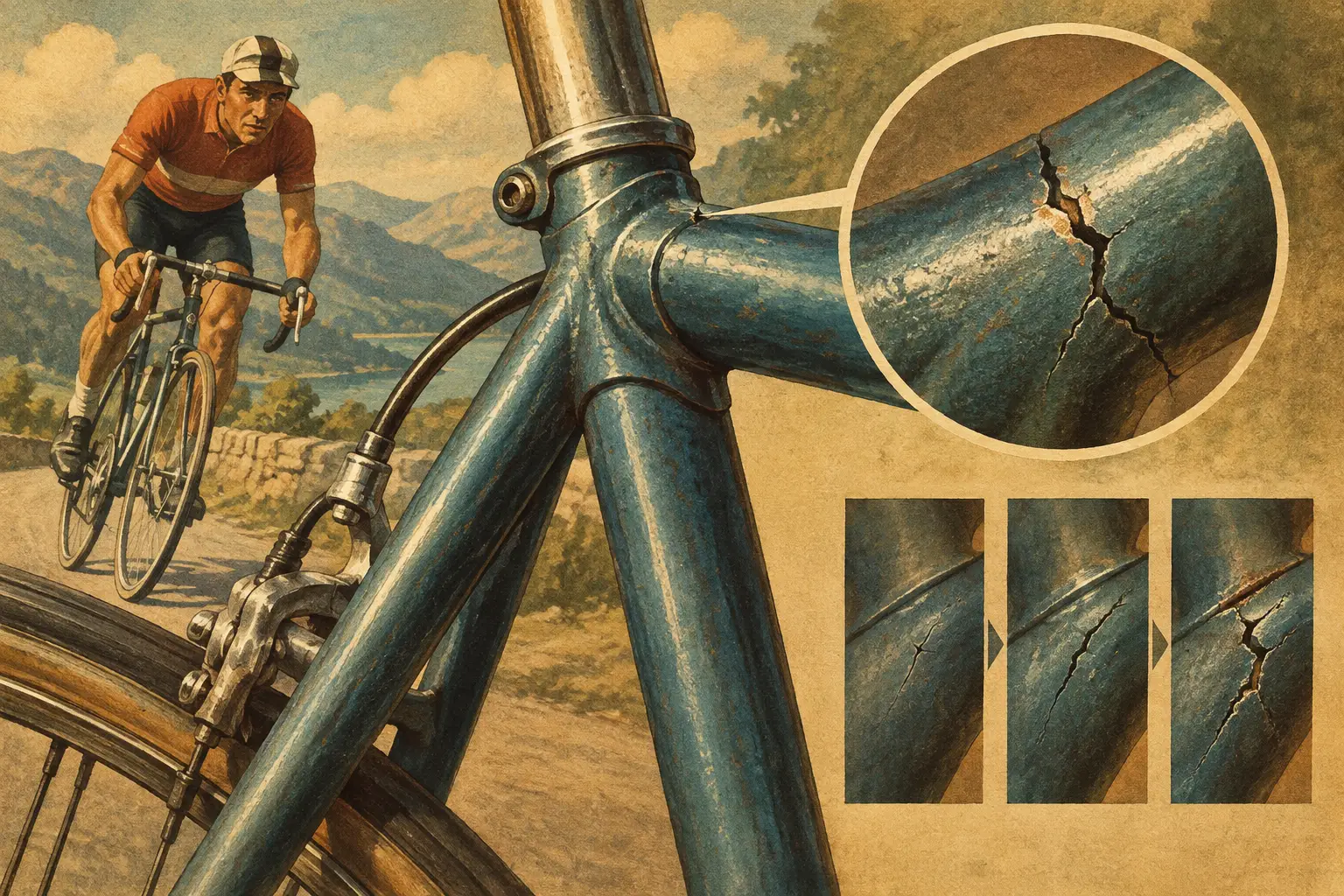
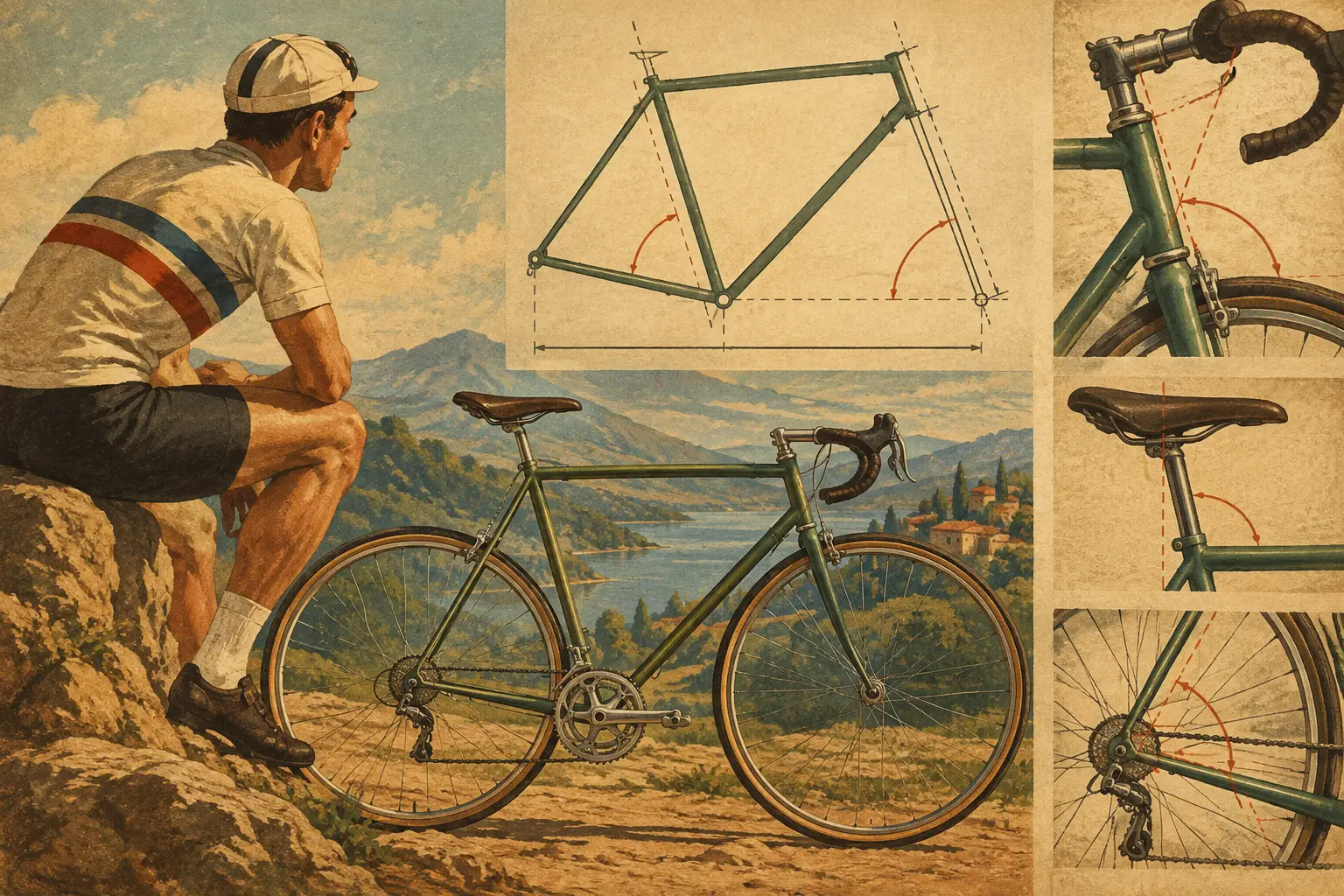
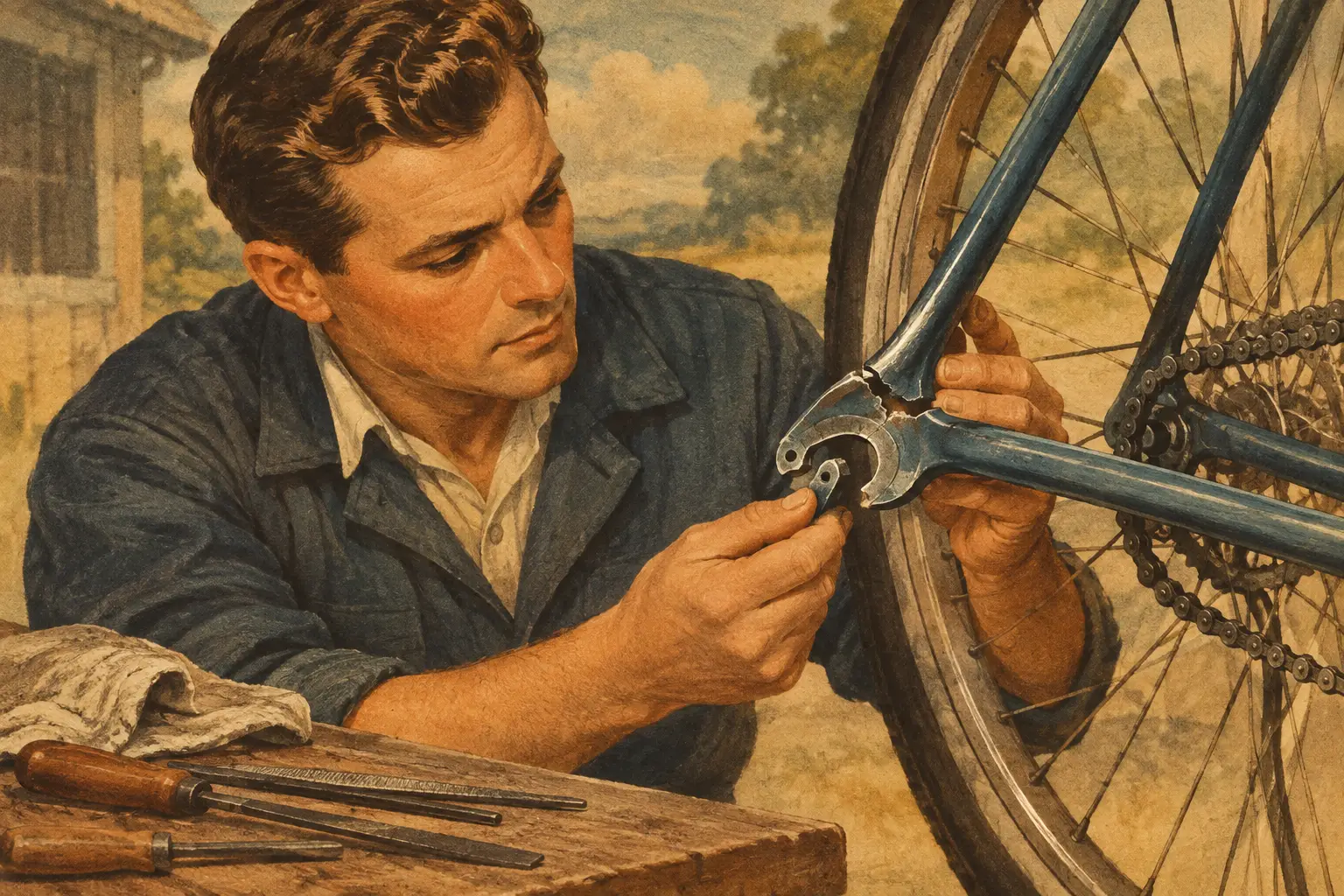
The frame and fork come first. Material, tube condition, existing damage, rack and mudguard mounts, dropout design, fork crown clearance and the available space in the main triangle all matter. A battery may appear secure when a bike is standing in a workshop, yet work loose after repeated vibration on rough tarmac, towpaths or forestry tracks. Where necessary, the mounting arrangement needs to be reinforced or redesigned rather than relying on a thin bottle-boss interface that was never intended for a heavy battery.
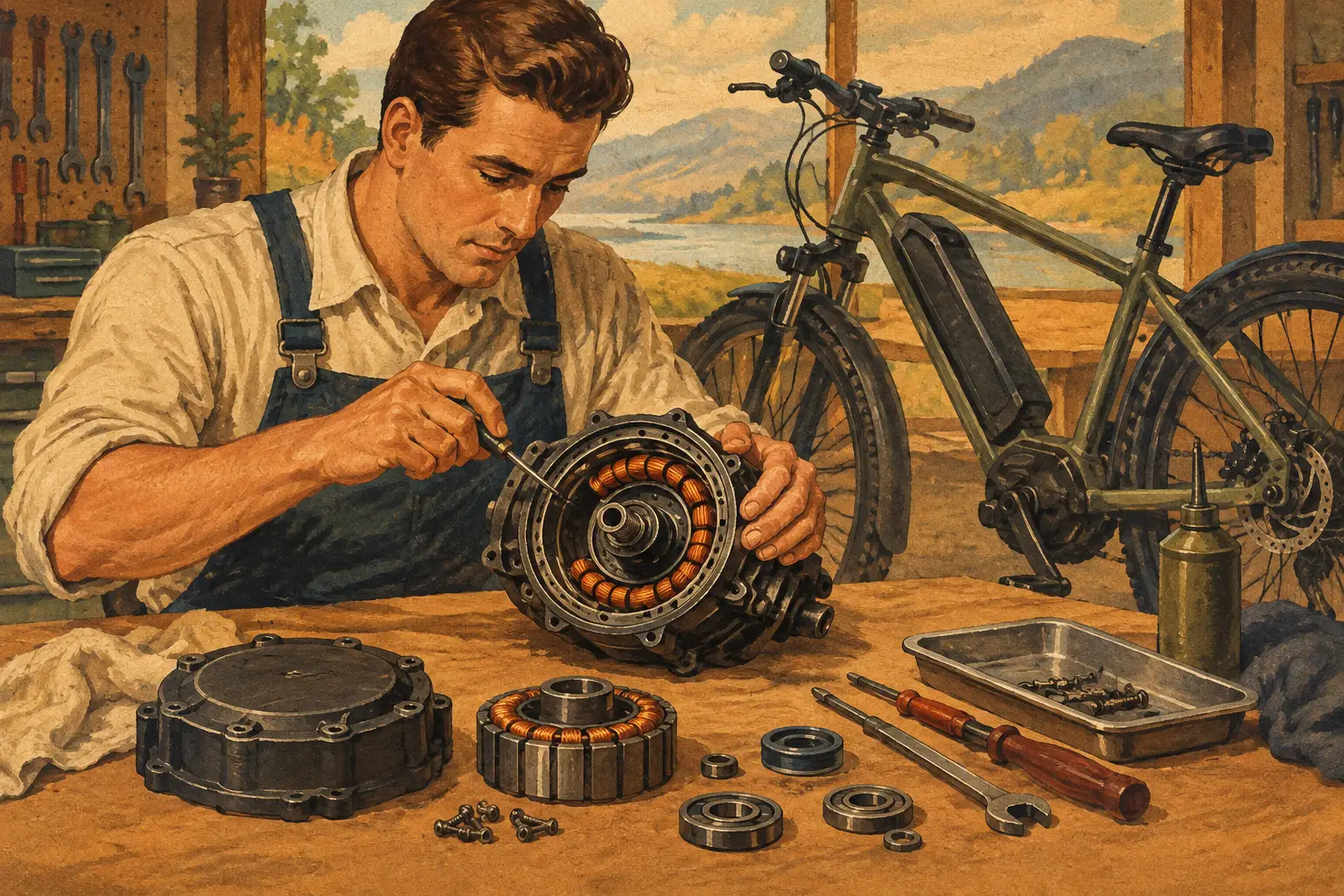
Wheel condition deserves equal scrutiny. Hub-motor conversions place their load directly into the wheel, dropout and axle interface. A suitable wheel needs the correct spoke count, rim specification, lacing pattern and spoke tension for the motor, rider weight and luggage load. Torque arms may be essential, particularly with aluminium forks or frames. A loose or poorly engineered axle connection is not a cosmetic issue. It can damage the dropout and create a serious safety risk.
The inspection should also cover four practical areas:
- brake performance, pad or rotor condition and heat capacity for the combined bike and rider mass;
- transmission wear, chainline and gearing for climbing under assisted torque;
- headset, bottom bracket, pivot bearings and suspension condition where fitted; and
- cable routing, lighting, mudguard clearance and protection from water, grit and luggage.
This is why a conversion should not be treated as an accessory fitting job. It is a modification to a working machine.
Hub motor or mid-drive: the right choice depends on the bike
Hub motors can be an excellent choice for straightforward commuter, utility and flatter-road use. They are often quiet, relatively self-contained and can preserve a conventional bottom bracket. A rear hub motor gives good traction, while a front hub may suit certain specialist builds where rear-wheel configuration makes other options difficult.
Their limitations need to be understood. A hub motor adds unsprung or rotating mass depending on its position, can make puncture repairs more involved, and requires a wheel built specifically for the duty. On steep, sustained climbs, a low-powered hub motor working at low speed may generate more heat and offer less efficient assistance than a well-matched mid-drive.
Mid-drive systems apply power through the bicycle’s gears. That can make them highly effective for hilly routes, loaded touring and riders who want natural-feeling assistance at a wide range of speeds. The trade-off is increased wear on chains, cassettes and chainrings, especially where riders shift under load or use high assistance in a tall gear. Fitment also depends on bottom bracket standard, chainstay shape, chainline and available clearance.
There is no universal winner. The correct system is the one that suits the frame, route, rider strength, desired range and maintenance expectations. If the bike has an unusual bottom bracket shell, carbon structure around the motor area, fragile dropouts or an already compromised frame, declining the conversion may be the responsible recommendation.
Battery placement is a handling and durability decision
Battery capacity affects range, but battery position affects the bike every time it changes direction, brakes or crosses a pothole. A low, central battery location usually gives the best handling. Frame-mounted batteries can work very well if the triangle provides enough space and the mounts are genuinely capable of taking the load.
Rear-rack batteries can be practical on step-through frames, small frames and machines with crowded front triangles. They also raise the centre of mass and place additional load behind the rider, so rack stiffness, stays, fasteners and luggage arrangements need careful consideration. On a heavily loaded touring bicycle, a rear battery may alter handling enough to justify a different installation approach.
A fitting service should also consider removal for charging, key access, weather protection and the route of every cable. Connectors must not be left hanging where tyre spray, chain lubricant or a heel can reach them. The installation should remain serviceable. If a puncture, brake bleed or headset adjustment later requires dismantling half the electrical system, the original work was not planned properly.
Legal power assistance and sensible specification
For ordinary road use in Great Britain, an electrically assisted pedal cycle must meet the relevant EAPC requirements to be treated as a bicycle rather than a motor vehicle. In broad terms, pedal assistance must cut out at 15.5 mph and the motor’s maximum continuous rated power is limited to 250 W. Throttles, higher-powered systems and altered speed limits can change the vehicle’s legal classification and the requirements around registration, insurance, helmet use and licensing.
The regulations and their application can be nuanced, especially with older machines, adaptive cycles and specialist controls. The right approach is to specify the system for legal, reliable use from the outset, then confirm the current position if a build sits outside a conventional pedal-assist arrangement. A conversion that is fast on paper but unsuitable for public-road use is poor value.
More power is not always more useful. A rider commuting 12 miles over mixed roads may benefit more from a correctly geared 250 W system, good tyres and a battery matched to winter range than from a larger motor that stresses the drivetrain and makes the bike harder to control. Range claims also need treating with care. Rider input, terrain, wind, temperature, tyre pressure, payload and assistance level all have a material effect.
Why the underlying bicycle matters
Converting a neglected bike simply hides its existing problems under extra capability. Worn brake callipers, a cracked rim, loose headset bearings or a fatigued luggage rack do not become acceptable because the bike now has assistance. They become more urgent when speeds and total mass rise.
There is considerable value in converting a well-fitting bicycle you already know. A quality steel touring frame, a sound hardtail, a practical city bike or a carefully configured adaptive cycle may be a better long-term platform than a disposable complete e-bike. The key is to assess the structure and components honestly, then renew or upgrade what the conversion demands.
At Ewhurst Bikes, that means looking beyond the visible fit of a kit. The aim is a conversion that remains stable under braking, practical to maintain, correctly supported at its mounting points and dependable through wet commutes, long rides and loaded climbs. Where frame modification, wheel building, cable management or structural reinforcement is needed, those details are part of the job rather than an afterthought.
Bring the whole use case to the appointment
The most useful conversation is not “which kit is cheapest?” It is “where do you ride, what do you carry, what hurts after a long day, and what must this bike still do?” Bring the bicycle if possible, along with details of your height, typical route, expected luggage, charging arrangements and any existing equipment you want to retain.
That gives the fitting process a clear purpose. A commuter may need dependable lights and a removable battery for a third-floor flat. A gravel rider may prioritise low weight, clean cable routing and generous tyre clearance. A touring rider may value repairable standards, conservative battery use and wheels built for many thousands of loaded miles.
Book an appointment before buying a conversion kit, particularly if your bike is older, unusual, damaged or heavily used. A measured assessment can prevent an expensive mismatch and help turn a bicycle you already trust into a machine you are pleased to ride further, more often and for many years.

Leave A Comment