
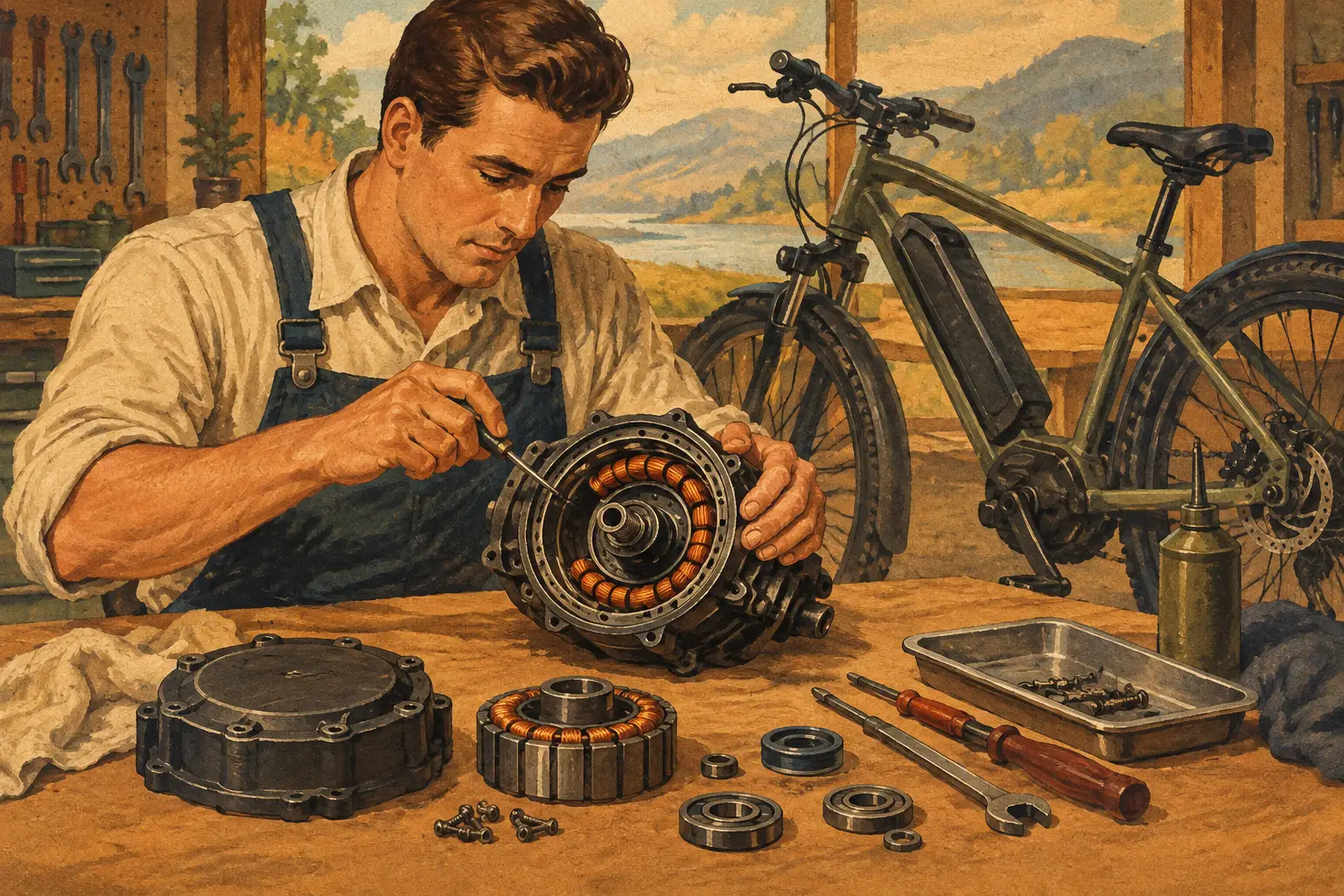
A noisy crank, intermittent assistance or an error code does not automatically mean an expensive new drive unit. A proper e-bike motor refurbishment guide starts with a less glamorous question: is the motor actually at fault? Batteries, wiring looms, speed sensors, displays, controller software and poor connections can all produce symptoms that feel like motor failure.
For riders who depend on an e-bike for commuting, touring, cargo carrying or long-distance riding, guessing is costly. The aim is not simply to make the warning disappear. It is to establish the fault, assess whether the unit can be rebuilt safely, and return the bike with reliable power delivery for the miles ahead.
Start with diagnosis, not a replacement motor
Modern e-bike systems are integrated assemblies. A mid-drive motor may communicate continuously with the battery management system, display, wheel-speed sensor and electronic controls. A fault in any one area can limit assistance, generate unusual behaviour or prevent the system from switching on.
A workshop diagnosis begins with the rider’s account. Does the fault occur under high torque on steep climbs, after rain, only when cold, or at a particular battery charge level? Does the motor cut out suddenly, pulse under load or make a mechanical noise while still providing assistance? Those details help separate an electrical fault from a worn mechanical component.
The next stage is inspection and testing. Connectors are checked for corrosion, bent pins, loose retention and water ingress. Cable routing matters, particularly around folding frames, rear suspension pivots and headset areas where wiring can be repeatedly flexed. The drivetrain is also inspected. A worn chain, hooked sprocket or damaged freehub can create a harsh sensation that is wrongly blamed on the motor.
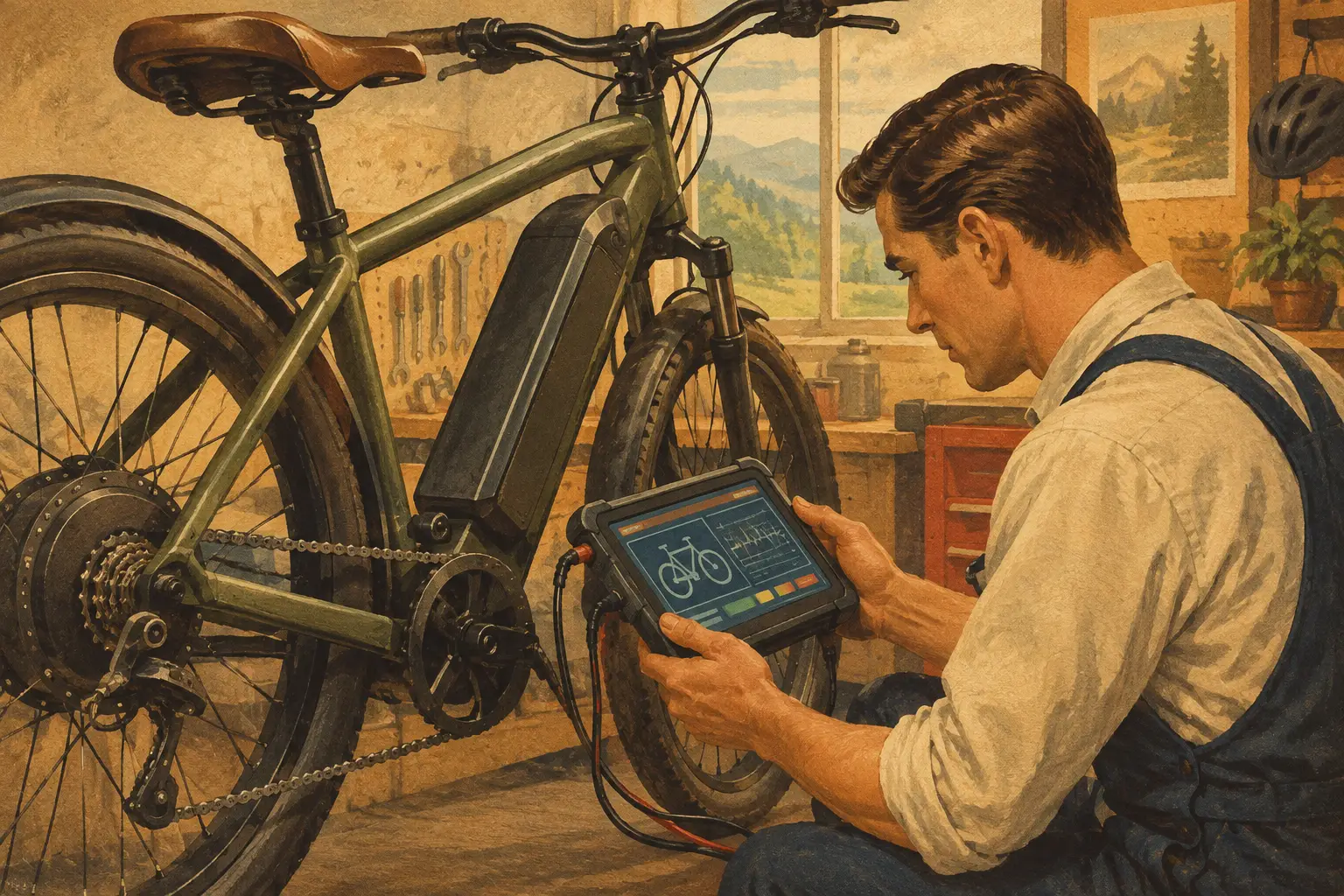
Where compatible diagnostic equipment is available, error history, sensor values and firmware status can be read before dismantling anything. Battery voltage under load, charging behaviour and system communication should be assessed as part of the same job. Replacing a motor without proving the battery and electrical system is sound can leave the original fault untouched.
When e-bike motor refurbishment is worthwhile
E-bike motor refurbishment is often worthwhile when a quality drive unit has suffered ordinary mechanical wear, contaminated bearings, degraded seals or a replaceable internal component. It can also make sense where a well-specified frame, battery and drivetrain remain in good condition, especially on a bike set up carefully for its rider.
Bearings are a common example. Side loading, year-round wet-weather use, pressure washing and repeated temperature cycles eventually affect bearing grease and seals. Early signs can include roughness when rotating, a growling sound under assistance, lateral play at the crank axle or increased drag when the system is switched off. Left alone, bearing wear can allow water and abrasive debris further into the unit.
Some motors use internal reduction gears, clutches or belts that can wear or become noisy. Depending on the model and availability of parts, these may be serviceable. Water ingress can sometimes be addressed with careful strip-down, cleaning, assessment of corrosion and replacement of seals and bearings. The word “sometimes” matters. Water that has reached circuit boards, sensors or windings may have caused damage that is neither reliable nor economical to repair.
Refurbishment is not always the correct answer. Certain proprietary drive units are sealed, software-restricted or supported only by complete-module replacement. Parts availability may be limited, and attempting to force access to a bonded casing can introduce further problems. An honest assessment may recommend a replacement motor, a manufacturer-supported repair route, or retirement of an uneconomic system rather than a doubtful rebuild.
Mechanical wear and electrical faults need different repairs
Mechanical refurbishment is concerned with the condition of moving parts and the protection of the motor internals. It may involve replacing bearings, seals, gears or freewheel components, cleaning contamination from housings and renewing the correct lubricant in the correct quantity. Too much grease can be as problematic as too little if it migrates into areas designed to remain dry.
Electrical repair demands a different level of caution. Hall sensors, torque sensors, phase wiring, thermal protection, circuit boards and windings are interdependent. A motor can appear to run unloaded on the workstand yet fail when asked to produce sustained torque on a climb. Testing should reflect real operating loads where possible, not merely whether the cranks turn.
Burnt windings, damaged insulation or heavily corroded electronics are serious findings. A repair that works briefly in the workshop but fails on a wet ride or under high load is not a repair worth paying for. This is why component-level work must be judged against the condition of the whole unit, the available evidence and the rider’s intended use.
A commuter covering gentle urban miles may accept a different cost calculation from an all-weather rider towing luggage through the Pennines. Equally, a powerful motor used on technical off-road climbs experiences more shock, torque and heat than one used for relaxed canal-path riding. Mileage alone is a poor guide to motor condition.
The frame and mounting system matter too
A motor does not operate in isolation. Loose mounting bolts, worn interface hardware or a damaged motor cradle can create movement that accelerates wear and stresses electrical connections. On some e-bikes, a creak under load is caused by the frame-to-motor interface rather than the motor internals.
The inspection should therefore include the mounting points, fasteners, cable entries and surrounding frame structure. Carbon, aluminium and titanium frames all require appropriate methods and torque control. If there is evidence of cracking, distortion or repeated fastener loosening, the root cause needs attention before refitting a repaired or replacement drive unit.
At Ewhurst Bikes, that engineering-led approach is central to e-bike work. A motor fault, frame issue and rider complaint are assessed as a connected system, because reliability depends on how those parts work together on the road or trail.
What a sound refurbishment process looks like
A worthwhile rebuild is controlled rather than improvised. Before opening the motor, its external condition, fault codes, play, noise and operating symptoms should be recorded. This gives a reference point and prevents a strip-down becoming an exercise in replacing parts without evidence.
Once dismantled, the casing, seals, bearings, gears and electrical connections can be inspected for the pattern of wear. Wear patterns often reveal the cause: water tracks may point to a compromised seal or cable entry, while localised bearing damage can suggest misalignment, excessive preload or a loose mounting interface. Simply fitting a new bearing without addressing the pathway that ruined the old one shortens the value of the work.
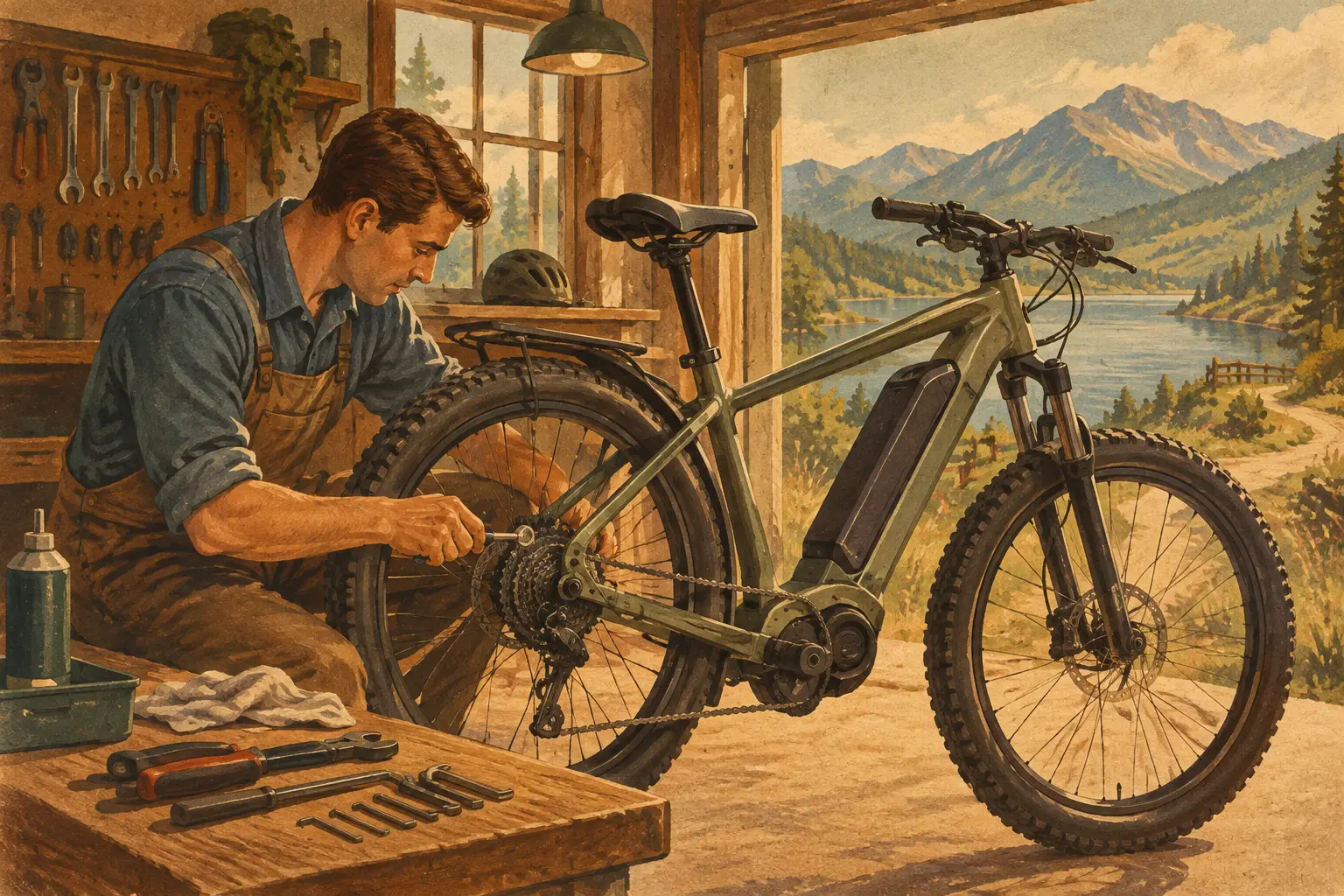
Reassembly needs clean working conditions, correct tools and manufacturer-appropriate torque settings. Seals must sit squarely, mating faces must be clean, and wiring must be routed so it cannot chafe or trap during installation. The motor then needs functional testing, including checks for abnormal noise, smooth assistance and reliable communication with the rest of the system.
A final road test is valuable where appropriate. It can reveal load-related cut-outs, torque-sensor inconsistencies and noises that do not show themselves on a stand. It also confirms that shifting, chainline and pedal feel remain correct after the motor has been removed and refitted.
Protect the rebuilt motor from an early repeat failure
E-bikes are made to be ridden in British weather, but they are not immune to poor cleaning and storage. Avoid directing a pressure washer at motor seals, battery contacts, display units or cable entries. Use low-pressure water, a soft brush and suitable cleaner, then dry the bike before charging or storing it.
Keep the drivetrain clean and correctly lubricated. A neglected chain transfers shock through the transmission, while poor shifting can load the motor harshly at the wrong moment. Check motor mounting hardware at service intervals, particularly after the first rides following any motor removal. If a new noise, vibration or intermittent cut-out develops, book it in early rather than continuing to ride until a small problem becomes internal damage.
Do not attempt to derestrict a road-going e-bike as part of refurbishment. It can compromise legality, insurance, system reliability and the safe design limits of the bike. The better performance gain usually comes from restoring smooth power transfer, correct gearing, a healthy battery and a drivetrain that wastes less of the motor’s assistance.
A refurbished motor should earn confidence through diagnosis, careful assembly and testing, not through optimistic promises. If your e-bike has become noisy, unreliable or reluctant under load, bring the symptoms and the bike together for assessment. A clear diagnosis is the most useful starting point, whether the answer is a rebuild, a replacement part or a simpler repair elsewhere in the system.







Leave A Comment