
A motor that feels excellent on a flat ten-mile commute can be a poor choice for a loaded touring bike climbing the Pennines in rain. The question of mid-drive versus hub motors is not about which system is universally superior. It is about matching the motor, battery, gearing, frame and intended use so the complete bike remains safe, efficient and serviceable.
That distinction matters, particularly with conversions. An e-bike motor is not an accessory bolted on after the engineering is finished. It changes loads through the frame, wheels, drivetrain, brakes and rider controls. The best result comes from assessing the whole machine rather than buying the motor with the largest number printed on the box.
Mid-drive versus hub motors: the core difference
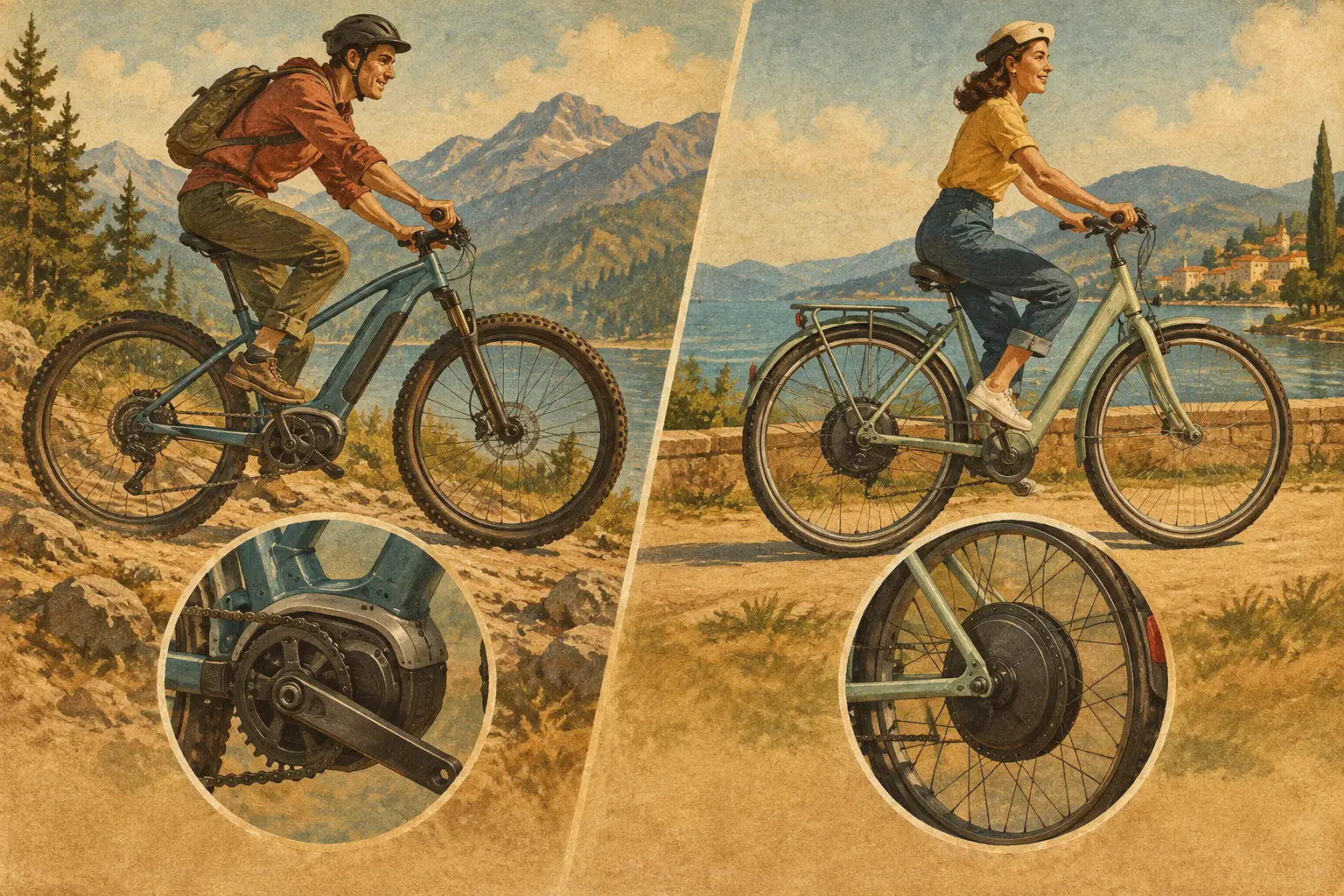
A hub motor sits inside either the front or rear wheel. It drives that wheel directly, independently of the bike’s chain, cassette and derailleur. A mid-drive motor is mounted around the bottom bracket and turns the chainring, using the bicycle’s existing gears to multiply torque at the rear wheel.
This is the central mechanical difference. A mid-drive works through the drivetrain, so it can spin efficiently while the rider selects a low gear for a steep hill or a high gear for faster road riding. A hub motor has a fixed internal reduction, or in some cases no reduction at all, and its operating speed is tied to wheel speed.
Neither layout is automatically right. A well-specified hub motor can be simple, quiet and remarkably dependable. A poorly installed mid-drive can wear chains and sprockets quickly, overload a light-duty transmission and create an awkward riding position. The frame and intended use decide the answer.
Why mid-drive motors excel on hills and mixed terrain
For hilly road riding, gravel, mountain biking, loaded touring and adaptive cycles, a mid-drive is often the more capable configuration. By using the gears, the motor stays nearer its efficient speed range on climbs. The rider can select a lower gear, reduce strain on the motor and put useful torque through the rear wheel without requiring an excessively large battery.
This is especially valuable on long, sustained gradients rather than short ramps. A hub motor that performs happily on rolling roads may slow significantly on a steep climb. As its speed falls, electrical current and heat can rise. In demanding conditions, repeated low-speed climbing can reduce efficiency and, depending on the system, trigger thermal protection.
A mid-drive also places its mass centrally and low in the frame. That usually produces more natural handling than a heavy rear wheel, particularly when negotiating loose gravel, tight trails or an unloaded bike rack. On a properly designed e-bike, the motor’s torque sensing can make assistance feel like a stronger version of the rider’s own pedalling rather than a separate force pushing the bike along.
There is a cost to this capability. The chain, chainring, cassette, freehub and derailleur carry both rider and motor torque. Under hard use, these are consumable components. A powerful mid-drive ridden in high gears, with poor shifting habits or an unsuitable chainline, can make a short life of expensive drivetrain parts.
For this reason, mid-drive builds require sensible gearing, durable components and a rider prepared to ease pedal pressure during shifts. On high-mileage machines, it is usually better to choose a chain and cassette intended for the expected torque and replace them before wear damages the more expensive chainring and freehub body.
Mid-drives are not automatically better for every commuter
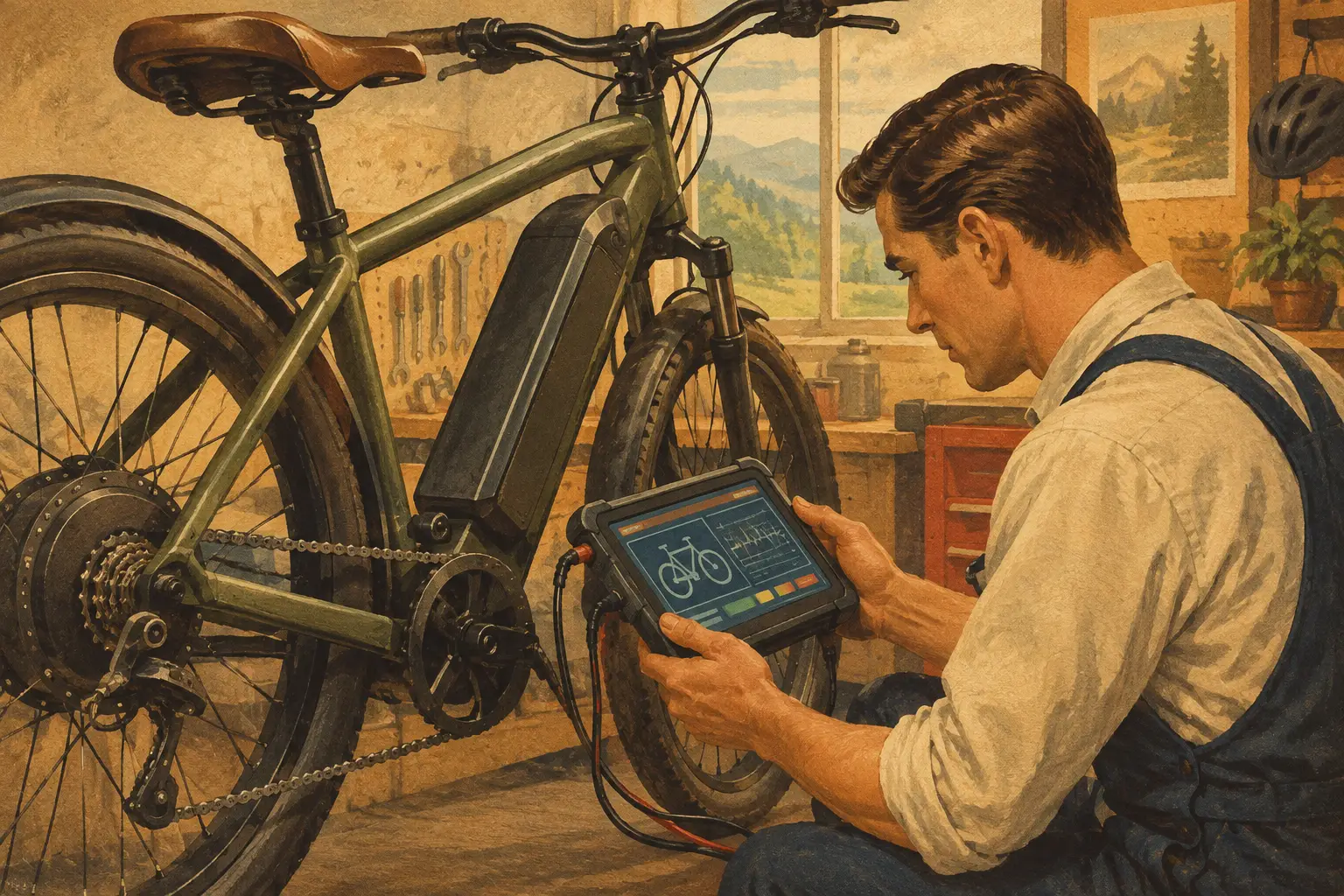
A mid-drive can be more mechanically involved than a hub system. Bottom-bracket compatibility, chainline, gear range, crank clearance, sensor arrangement and frame material all need checking. Some conversions can be physically possible but create unacceptable pedal stance, reduced ground clearance or unsuitable load paths around the bottom bracket.
For a lightly loaded commuter on mostly level roads, these compromises may bring little benefit. The bike may simply not need the climbing performance or central mass of a mid-drive.
Where hub motors make sense
Hub motors suit many real-world e-bikes because their drive path is independent from the bicycle transmission. The chain and cassette still wear normally, rather than carrying motor torque. This can be a significant advantage for commuters who want predictable maintenance, or for bikes using hub gears where a conventional chain can be kept enclosed and clean.
A rear hub motor generally gives better traction than a front hub motor because more rider weight sits over the rear wheel. It can be an effective choice for commuting, utility riding, flatter touring routes and straightforward conversions where reliable assisted travel matters more than technical climbing performance.
A front hub motor can be useful on certain specialist machines, including some trikes, recumbents and adaptive cycles. It avoids interference with the rear transmission and can create two-wheel drive when paired with a rider-driven rear wheel. However, front-wheel traction must be treated seriously. On wet leaves, loose gravel or steep slopes, a driven front wheel can spin or pull the steering. The fork, dropouts and axle retention must also be suitable for the motor’s torque.
Rear hub motors concentrate weight in the back wheel. That can make a bike feel less lively when lifting it, hopping kerbs or riding technical ground, and wheel removal is more involved because of the motor cable and axle hardware. A puncture at the roadside is not necessarily difficult, but it is not the same job as removing a conventional wheel.
Geared and direct-drive hub motors
Most practical UK hub-motor conversions use geared hub motors. Internal planetary gears allow a smaller, lighter motor to provide useful low-speed assistance. They normally freewheel with relatively little drag when unpowered, which makes them pleasant for ordinary pedalling.
Direct-drive hub motors are larger and heavier, but mechanically simpler internally. Some support regenerative braking, although the real-world energy returned on a bicycle is modest. Regenerative braking can still be useful on long descents because it provides controlled braking and reduces rim or disc brake workload, subject to the controller and system design.
For most riders, choosing between geared and direct-drive hubs is less important than selecting the correct wheel build, controller calibration, battery capacity and brake arrangement. A motor is only as dependable as the components supporting it.
Range, battery use and rider input
Neither motor type guarantees better range. A carefully ridden hub motor on level roads can be extremely efficient. A mid-drive can use less energy on steep, variable terrain because it benefits from the bike’s gears. Battery capacity, rider contribution, tyre pressure, wind, temperature, luggage, gradients and speed have substantial influence.
The rider who expects maximum range should avoid treating assistance as a replacement for pedalling. Smooth cadence, timely gear changes and moderate assistance levels reduce current draw and heat. That approach improves range while also extending the life of the battery and drivetrain.
Battery position affects handling as much as battery size. A centrally mounted battery inside the main triangle is generally preferable to a heavy unit high on a rear rack, especially on gravel bikes and machines carrying panniers. The mounting must resist vibration, keep cables protected and allow access for charging and inspection.
Conversion engineering: what needs checking first
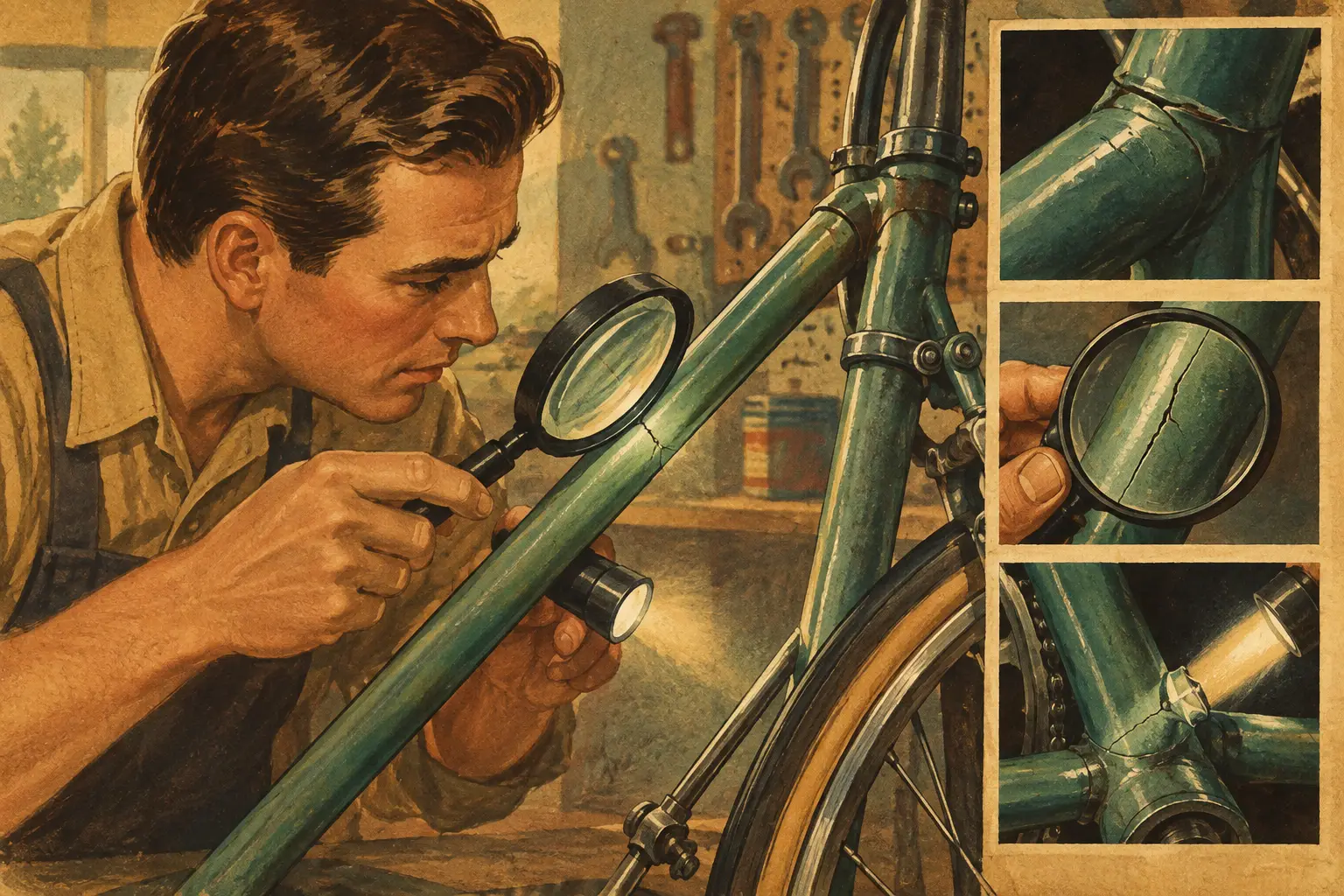
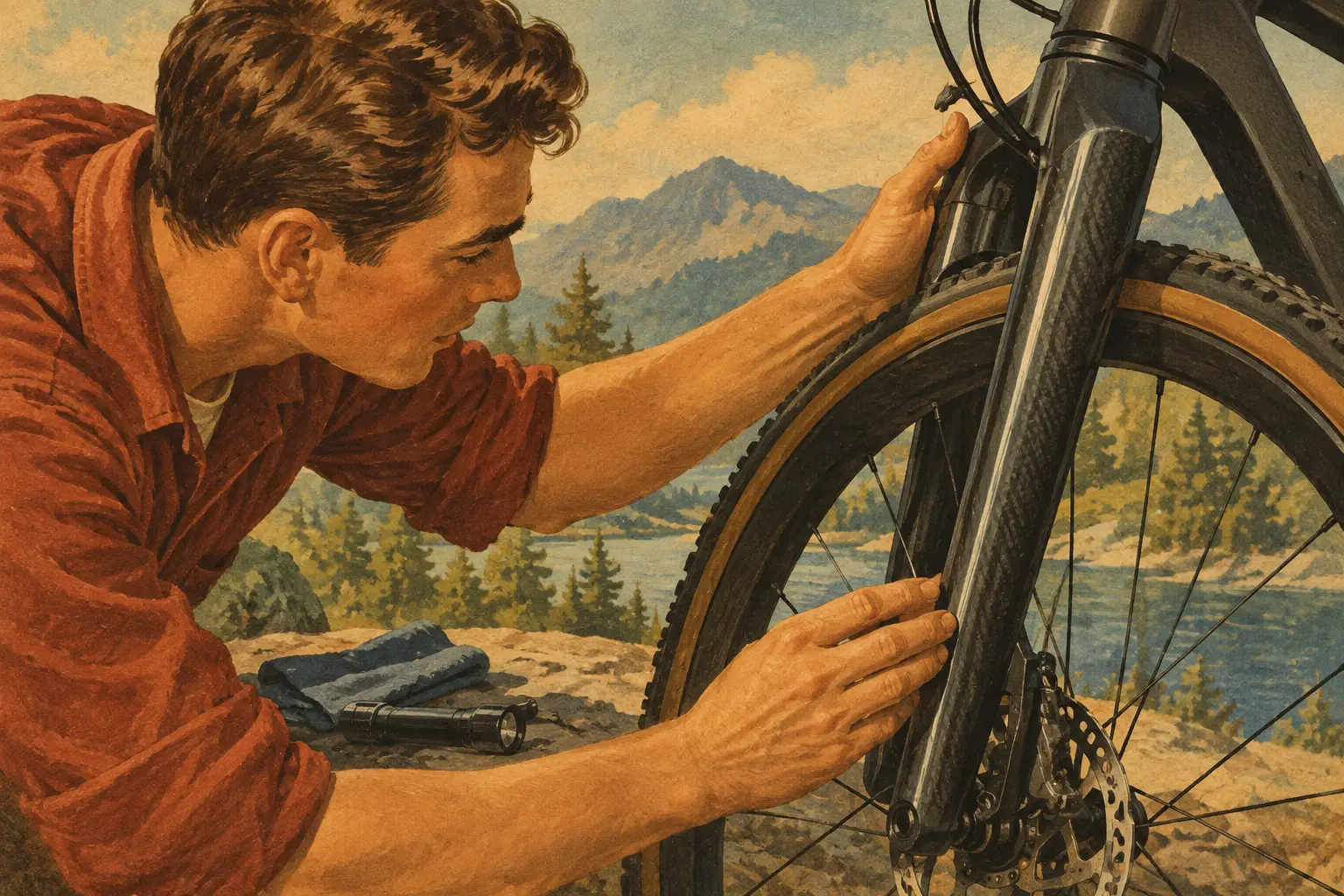
Before selecting a motor, inspect the host bike properly. Frame condition, dropouts, wheel size, brake mounts, fork construction, bottom-bracket standard, gear range and expected rider-plus-luggage weight all matter. Carbon forks, lightweight suspension components and damaged dropouts deserve particular caution. A conversion should never be used to conceal existing structural problems.
Wheel strength is often overlooked. A hub motor applies torque at the axle while adding substantial rotating mass at the rim. The wheel needs appropriate spoke count, spoke gauge, lacing pattern, rim specification and tension. A cheap pre-built motor wheel may work for gentle use, but it is not automatically suitable for potholes, cargo, rough tracks or a heavier rider.
Braking must be considered alongside motor performance. Faster average speeds and higher bike mass demand reliable stopping power, correctly sized discs where applicable, sound pads and rotors, and properly maintained callipers. On a road or touring build, tyre choice and wet-weather braking behaviour are part of the same safety decision.
In the UK, a road-legal electrically assisted pedal cycle normally requires pedal assistance, a motor rated at no more than 250 watts continuous rated power, and assistance that cuts out at 15.5 mph. Systems outside these requirements may fall into a different legal category. It is worth establishing the intended use before committing to a build, rather than discovering later that an attractive kit is unsuitable for public-road use.
Choosing for the bike you actually ride
Choose a mid-drive when frequent steep hills, variable surfaces, heavy loads or technical riding are central to the brief. It is usually the stronger engineering answer for a performance gravel bike, hill-country tourer, cargo-capable machine or adaptive cycle where controlled low-speed torque matters.
Choose a rear geared hub motor when you want straightforward, independent assistance for commuting, flatter routes or utility riding, and you value reduced drivetrain loading. It can also be the sensible choice where the existing gearing is already reliable and the frame does not lend itself to a bottom-bracket motor.
The deciding question is not, “Which motor has the biggest headline output?” It is, “What loads will this bicycle see over the next several years?” That leads to better choices around gearing, wheels, battery mounting, cooling, brakes and maintenance.
For a conversion or refurbishment that needs to survive British roads, weather and real mileage, Ewhurst Bikes can assess the complete machine before parts are specified. Bring the bike, explain where you ride and what you carry, and build around the job rather than the marketing claim.


Leave A Comment