
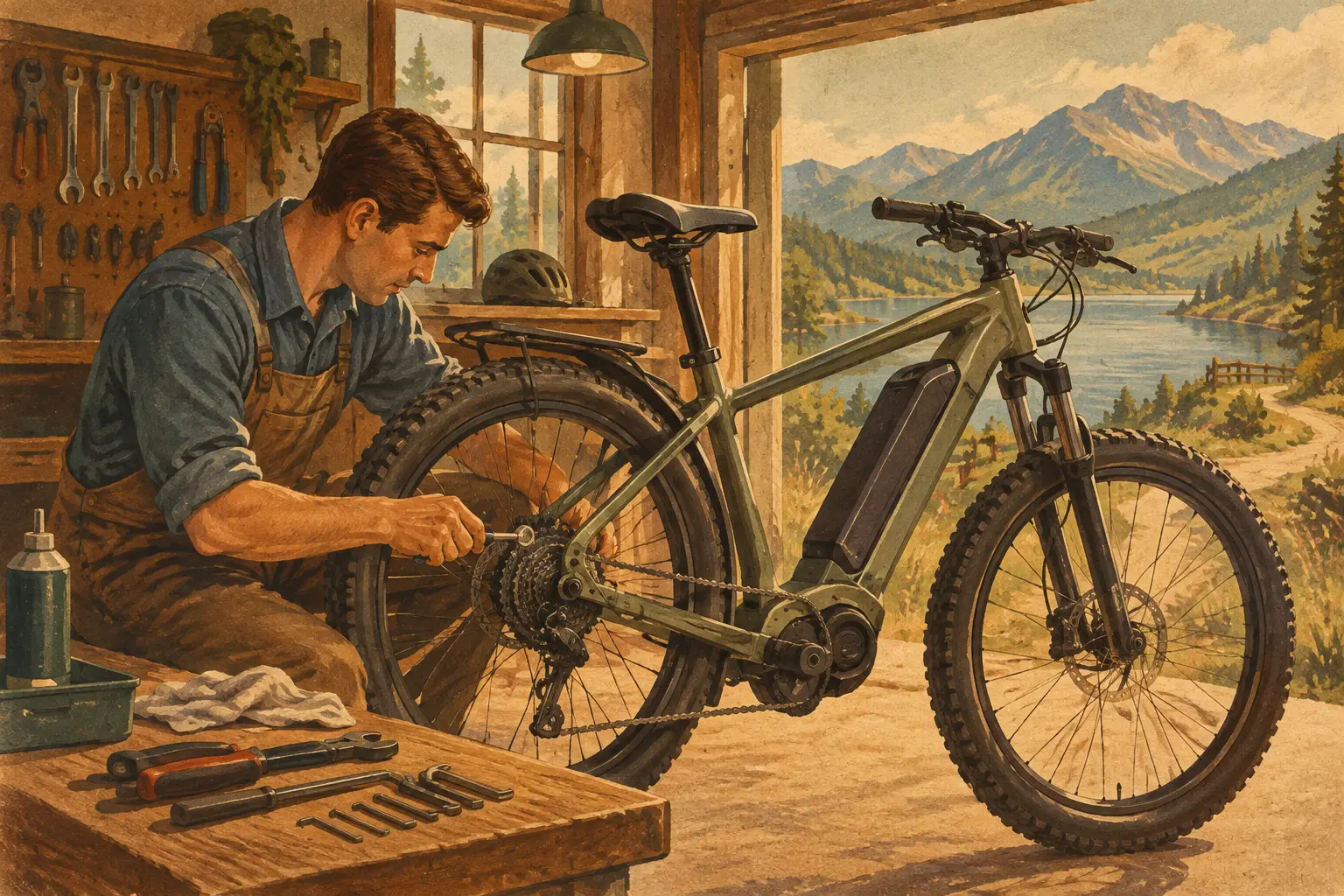
A hesitant assist pickup on a steep County Durham climb, a brake that starts to pulse under load, or a battery that no longer gets you home with the range expected are not minor annoyances. They are signs that your e-bike needs proper attention. Good e-bike servicing is not simply a conventional bicycle service with a diagnostic plug added at the end. It is a joined-up inspection of a high-load bicycle, its electrical system and the way the two interact in real riding conditions.
Electric bikes cover more miles, carry more weight and apply more torque through the drivetrain than their unassisted equivalents. That makes regular, engineering-led maintenance a direct investment in safety, range, ride quality and the useful life of expensive components.
Why e-bike servicing needs a different approach
An e-bike can disguise mechanical deterioration for longer than an ordinary bike. Motor assistance can carry a rider through the early stages of a worn chain, dragging brake or tired bearings. Then the problem reaches the point where shifting becomes unreliable, range falls away or a component fails under a higher-than-normal load.
The extra mass matters too. A loaded e-bike travelling at commuting or touring speed places considerable energy into the brakes on every descent. Wheels see greater spoke loads, tyres are more vulnerable to damage, and suspension pivots or headset bearings can wear quickly when ridden through wet British winters. A service needs to establish not only whether a part still works, but whether it is suitable for the forces it will see before the next inspection.
Electrical faults also demand disciplined diagnosis. A poor connection, damaged cable, contaminated speed sensor or intermittent battery contact can produce symptoms that appear to be a motor problem. Replacing costly parts before confirming the cause is poor practice. The right process begins with inspection, measured checks and fault tracing, then agrees the appropriate repair before work proceeds.
What a thorough e-bike service should examine
The bicycle beneath the electrical system
The mechanical bike comes first. The frame and fork need close inspection around highly stressed areas: the head tube, motor mounts, battery rail, rear dropouts, suspension pivots and rack or mudguard fixings. Cracks, corrosion, loose hardware and damaged threads are easier and less expensive to address when identified early. On older conversion bikes, mounting points deserve particular scrutiny because the original frame may not have been designed for the new loads.
Brake assessment should go well beyond checking that the levers operate. Pads, rotors, hoses, callipers and mounting bolts must be inspected for wear, contamination, heat damage and correct alignment. E-bike pads can wear surprisingly quickly in hilly use, especially where a rider relies on the motor to sustain higher average speeds. A brake that feels acceptable around town may overheat or fade on a long descent with luggage.
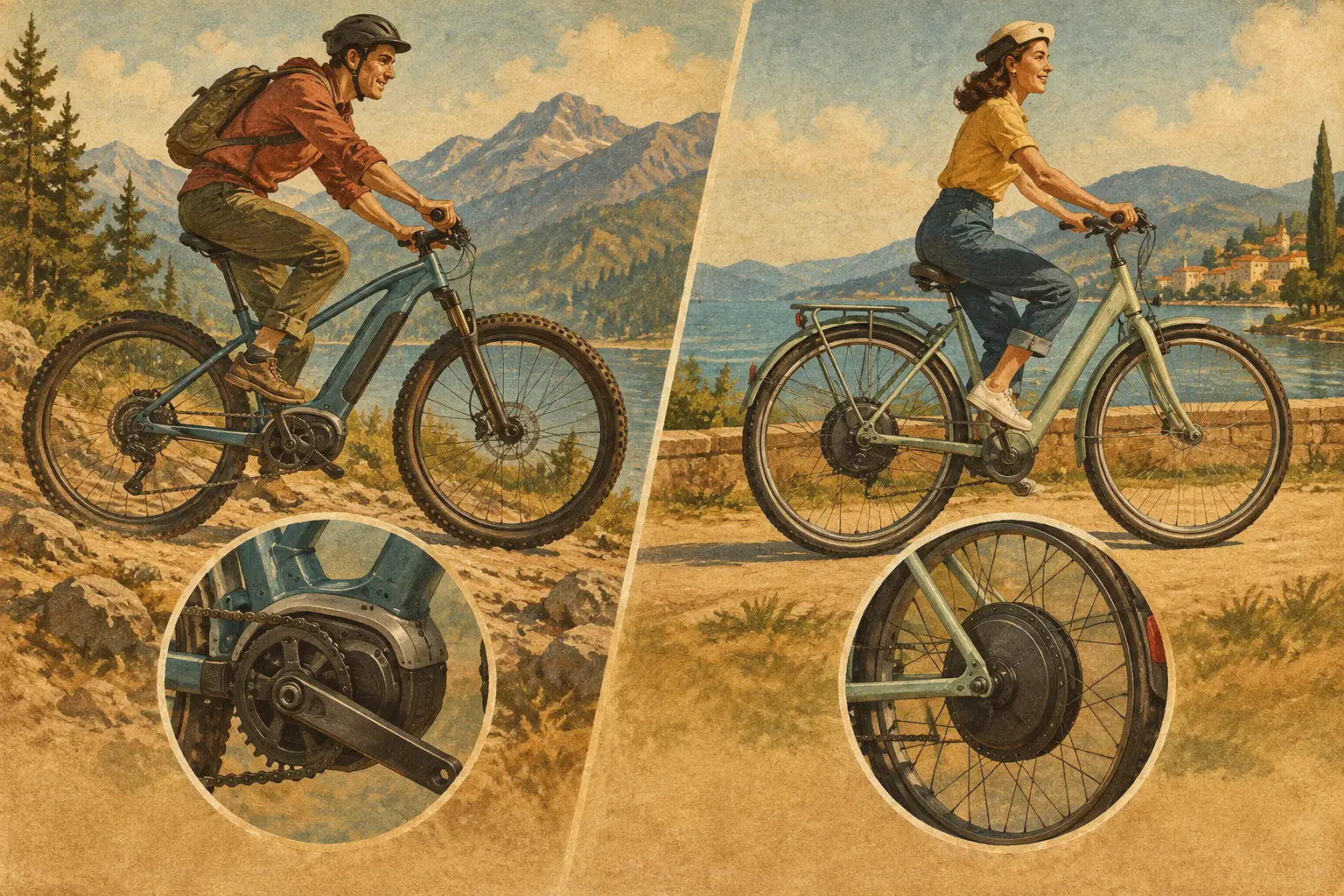
Drivetrain wear is equally significant. A chain checker is only the start. Chainring, cassette, jockey wheels, derailleur alignment and freehub condition all affect efficiency and shift quality. On mid-drive e-bikes, the rider’s and motor’s torque pass through the same chain. Replacing a worn chain at the right time is far better value than allowing it to ruin a cassette and chainring together.
Wheel work should include spoke tension, rim condition, hub bearing adjustment and tyre inspection. Loose spokes are not a cosmetic issue: they allow load to concentrate in a few spokes and can accelerate rim fatigue. A well-built and correctly tensioned wheel is one of the most meaningful reliability improvements an e-bike rider can make, particularly for touring, cargo, adaptive and rough-surface use.
Battery, motor and control system checks
Battery care is mostly about condition, connections and sensible use rather than trying to dismantle a sealed pack. The casing should be checked for damage, swelling, cracks and water ingress. The terminals and battery rail need to be clean, secure and free from signs of overheating or arcing. A battery that moves in its mount can interrupt power over bumps and wear away electrical contacts.
A competent inspection considers charge behaviour and reported range alongside the battery’s age, mileage and operating history. Cold weather will reduce available range, as will sustained high assistance, steep terrain, heavy loads and soft tyres. Those are normal limitations, not necessarily faults. A sudden and unexplained reduction in range, repeated cut-outs or a charger that behaves unusually warrants investigation.
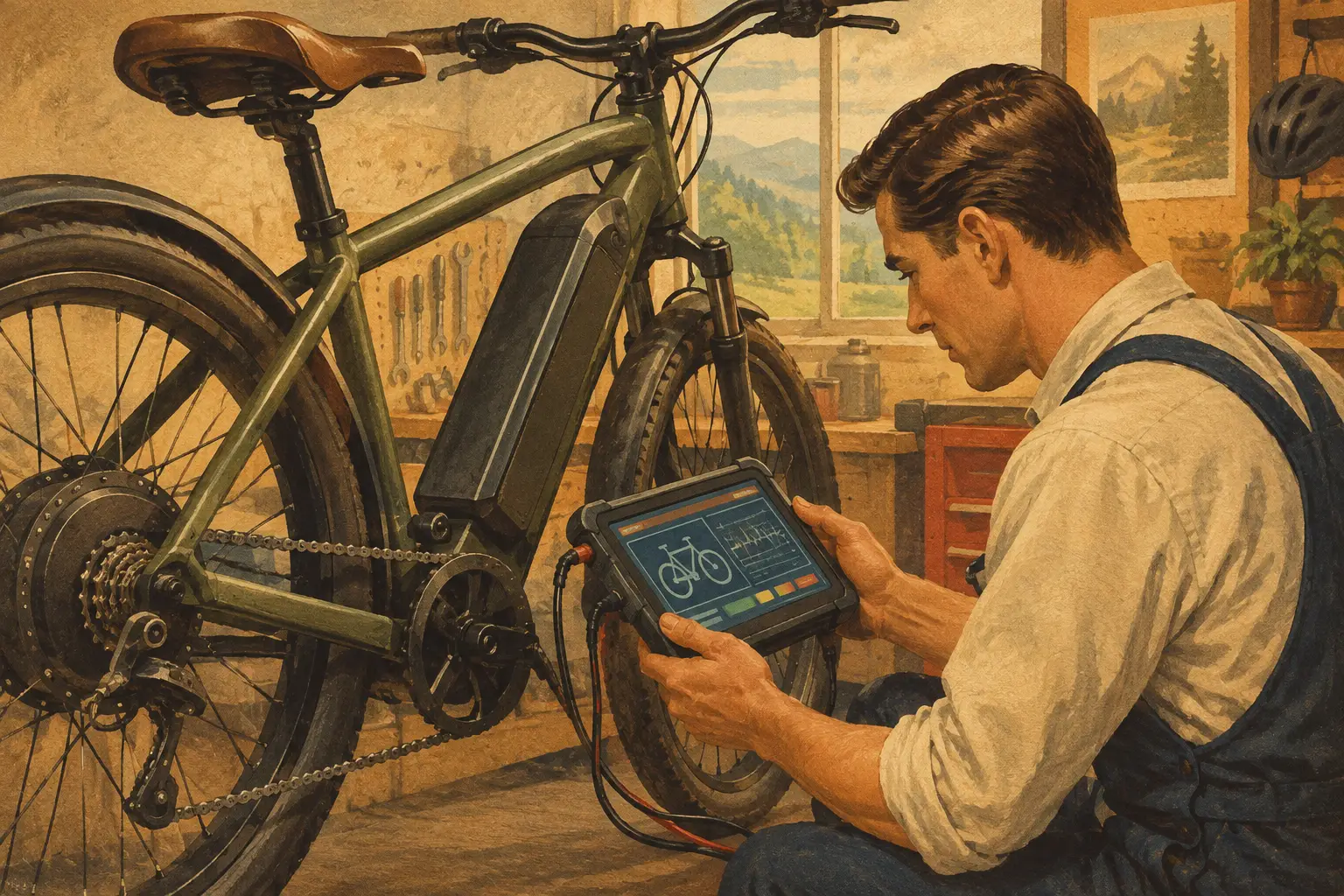
Motor diagnostics should start with the rider’s description of the fault. Does the issue occur only under torque, after rain, at a certain battery level or when changing assistance mode? Is there noise from the motor, or could it be a dry chain, loose crank or worn bottom bracket interface? Diagnostic software, where supported by the system, can reveal stored fault codes and operational data. It is useful evidence, but it does not replace physical inspection.
Cables, displays, remote controls, lights and sensors also need practical checks. Wiring should be correctly routed, protected from chafing and kept clear of steering movement, suspension travel and rotating parts. A temporary-looking cable tie arrangement can become a recurring electrical fault once water and vibration get involved.
How often should an e-bike be serviced?
For a regularly ridden commuter or leisure e-bike, an annual full service is a sensible baseline. Riders covering high mileage through all seasons, using a powerful mid-drive, towing a trailer or riding steep terrain should consider inspection at roughly six-month intervals. The correct schedule depends on use, not a date in the diary alone.
Between appointments, keep the chain clean and lubricated, check tyre pressures, inspect pads and make sure the battery is fully seated. If the bike has been pressure-washed, ridden through deep water or involved in a crash, arrange an inspection sooner. Water forced into bearings, electrical connectors or motor areas is rarely kind to long-term reliability.
Storage matters as well. Keep the battery dry and away from temperature extremes. For a prolonged period without riding, follow the manufacturer’s guidance for storage charge rather than leaving it fully depleted. Never continue using a battery with obvious physical damage, swelling, overheating or a burning smell.
Repair, refurbishment or replacement?
Not every e-bike fault calls for a new system or a new bike. In many cases, careful mechanical work, a new drivetrain, wheel rebuild, brake overhaul, connector repair or correctly specified replacement component returns a good machine to dependable service. This is especially worthwhile where the frame fits well, the bike has proven itself over years of riding, or it has been adapted for its rider.
There are limits. A damaged battery pack should not be treated as an ordinary repair item, and unsupported electronic systems can make replacement parts difficult to obtain. A sound decision weighs safety, parts availability, cost and the expected life of the rest of the bicycle. The cheapest immediate fix is not always the best value if it leaves fundamental wear, poor wheel condition or structural concerns unaddressed.
For conversions, the standard should be higher still. Motor mounting, torque reaction, brake capacity, wheel strength, cable routing and rider control all need to work as a system. Adding power without considering the structure and components around it can create problems that were never present on the original bike.
E-bike servicing for riders who depend on their bikes
At Ewhurst Bikes, e-bike work is approached as bicycle engineering rather than a quick reset of a fault code. That means identifying what has worn, why it has worn and whether a practical modification or more durable component choice will prevent the same problem returning. It is particularly valuable for high-mileage commuters, endurance riders, heavy-duty touring bikes, electric handcycles and machines that have to work every day.
Bring a clear account of the symptoms, how the bike is used and what has changed. A useful service conversation may include mileage, terrain, rider and luggage weight, recent weather exposure, charging behaviour and any warning messages. Those details shorten diagnosis and lead to a repair plan that suits the bike’s actual job.
A properly serviced e-bike should feel predictable: powerful when asked, quiet under load, stable under braking and ready for the distance you planned. If yours is giving different answers, book an appointment before a small defect becomes the reason it stays in the shed.







Leave A Comment