
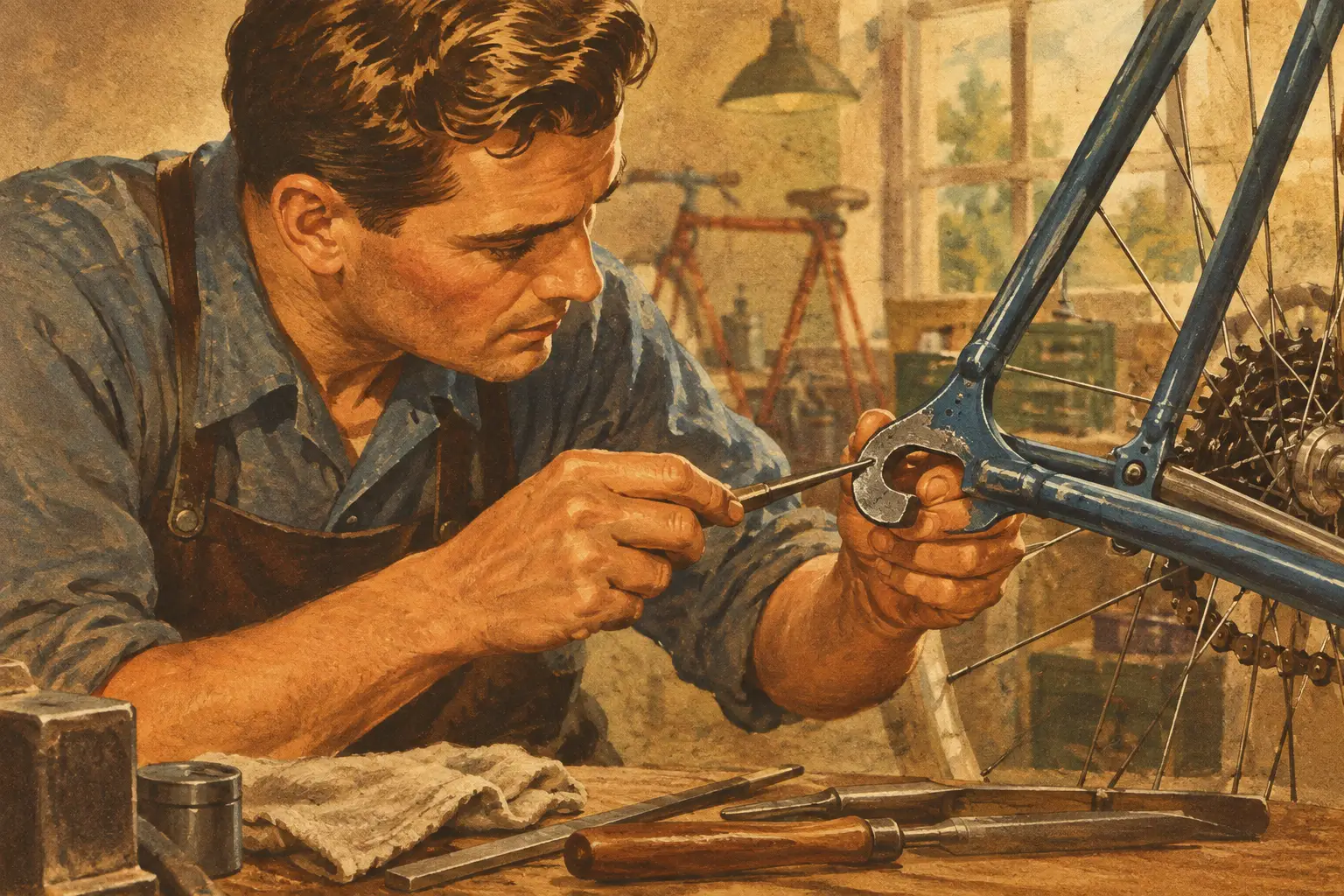
A rear wheel that will not sit squarely, a disc rotor that suddenly rubs, or a derailleur hanger that keeps bending can point to more than a minor knock. Can bike dropouts be repaired? Often, yes – but the right answer depends on what has actually failed, what the frame is made from, and whether the surrounding structure has been distorted or fatigued.
A dropout is a highly loaded part of a bicycle frame or fork. It locates the axle, transfers pedalling and braking forces into the structure, and on geared bikes provides the mounting point for the derailleur hanger. Treating a cracked or bent dropout as a cosmetic issue risks poor wheel retention, repeated component damage and, in the worst case, a loss of control. Proper repair starts with diagnosis, not a welder.
Can bike dropouts be repaired safely?
They can, provided the remaining frame material is sound and the repair restores both structural strength and axle alignment. Some cases call for a straightforward replacement of a sacrificial derailleur hanger. Others require a new dropout section, local reinforcement, heat treatment considerations, precision machining or the conclusion that a frame is not economically or safely repairable.
The key distinction is between the hanger and the dropout itself. Modern road, gravel and mountain bikes commonly use a replaceable hanger designed to bend or break in a derailleur strike. If only the hanger is damaged, replacement and alignment checking are normally all that is needed. The frame dropout is the larger structure around it. If that is cracked, spread, twisted or pulled out of plane, fitting a fresh hanger will not cure the problem.
A professional assessment should establish whether the failure came from one sharp impact, repeated fatigue loading, an incorrectly seated axle, overtightened bolts, poor previous repair work or an underlying alignment problem. A broken dropout is sometimes the final visible symptom rather than the original fault.
What a dropout repair must restore
A repair is not successful merely because the crack has disappeared. The wheel must locate accurately, the axle faces must be parallel where the design requires it, and the derailleur hanger must sit in the correct plane relative to the cassette. On disc-braked bikes, caliper and rotor alignment also matter. A few millimetres of distortion at the dropout can produce persistent gear indexing problems, rotor drag and unequal stress through the axle.
For this reason, a structural repair is followed by measurement. We check dropout spacing, axle-seat geometry, frame alignment and hanger alignment, then test-fit the intended wheel and axle system. Thru-axle frames demand particular care: damaged threads, an ovalised axle bore or a distorted dropout face can prevent the axle from clamping as designed even if the wheel appears secure.
The finish matters less than the geometry beneath it. Paint can hide a crack. A tidy weld can hide poor penetration, unsuitable filler material or a repair that has pulled the dropout out of line.
Steel dropouts: usually the most repairable
Steel frames have long service lives partly because their dropouts and stays can often be repaired or replaced. A cracked steel dropout can commonly be removed and replaced with a compatible part, or welded and reinforced where the design and damage permit. Steel tolerates carefully controlled local welding better than many aluminium structures, although it is not immune to fatigue or poor workmanship.
The important question is where the crack begins and ends. A small crack at the edge of a dropout may be contained. A crack travelling into a chainstay, seatstay, brake bridge or forged yoke requires a wider inspection. Rust within the tube, thin original wall thickness, previous brazing or multiple historic repairs can change the decision completely.
On classic touring and road frames, replacement can be an excellent long-term solution. It may also be an opportunity to correct an obsolete axle standard, add a derailleur hanger provision or improve strength around a known weak point, while preserving the bike’s intended handling and ride quality.
Aluminium requires more than welding skill
Aluminium dropout damage is repairable in selected cases, but it needs a more cautious engineering approach. Many aluminium frames rely on heat treatment for their design strength. Welding locally changes the material condition in and around the heat-affected zone, which can leave an apparently sound repair substantially weaker unless the frame is correctly designed, repaired and, where appropriate, post-weld heat treated.
A replaceable forged dropout insert may be replaced successfully. A damaged aluminium hanger mount can sometimes be rebuilt, machined and aligned. However, a crack extending from a dropout into a thin, highly shaped chainstay is a different proposition. The repair must account for material grade, wall thickness, original weld layout, fatigue history and the loads the rider will impose.
This is why a quick aluminium weld is rarely a responsible answer. A frame used for loaded touring, powerful e-bike riding, technical mountain biking or high-mileage gravel events needs a repair strategy that reflects those real forces, not just the fact that the crack can be filled.
Titanium repairs can be exceptionally durable
Titanium is often highly repairable, but only with disciplined preparation and welding control. A titanium dropout or dropout-adjacent crack may be repaired, reinforced or have a section replaced, provided the parent material is correctly identified and contamination is prevented. Titanium welding demands excellent shielding and clean joint preparation. Poor shielding can create a brittle, contaminated weld that looks acceptable at a glance but has no place on a hard-ridden bicycle.
The cause of failure deserves particular attention. Titanium frames can crack because of a poor original weld, an abrupt section change, an overly stiff dropout design, inadequate stress relief, misalignment or years of cyclic loading concentrated at one point. Simply rewelding the visible crack may send the stress back to the same location. A proper repair can include changing the local geometry or adding a considered reinforcement so the frame has a better chance of a durable future.
Carbon dropouts and bonded inserts need case-by-case inspection
Carbon fibre frames and forks often use bonded aluminium or steel dropout inserts. Damage can involve the insert itself, the adhesive bond, surrounding laminate, a hanger mount or the interface between several of these parts. A visible crack may be only a fraction of the damaged area.
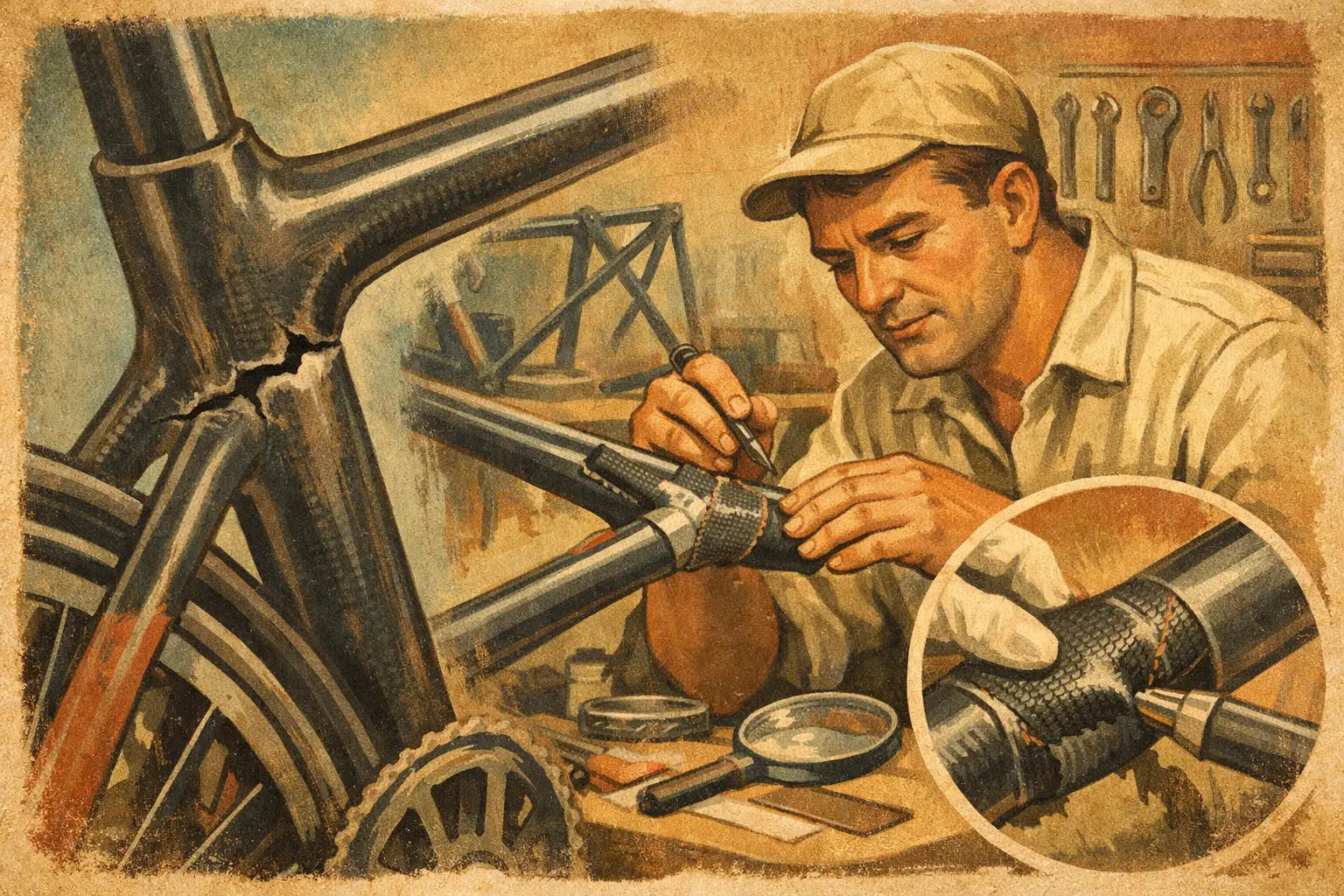
Carbon repair is possible when the load path can be rebuilt correctly and the damaged laminate can be removed, prepared and replaced with suitable fibre orientation and consolidation. But dropouts are not a place for guesswork. The repair has to recreate the structural relationship between axle, insert and frame, then verify alignment. Damage near a carbon fork dropout deserves additional caution because the consequences of failure are severe.
Paint cracking around an insert, a creaking axle interface, a dropout that moves under hand pressure, or a wheel that repeatedly comes loose are all reasons to stop riding until the bike has been assessed.
When replacement is the better decision
Not every frame should be saved. Replacement is often the sensible option where damage is widespread, the frame has multiple fatigue cracks, critical material properties cannot be restored, replacement parts are unavailable, or the cost of a trustworthy repair exceeds the frame’s real value. That is not a failure of repair work. It is an honest engineering judgement.
Likewise, a repair that is suitable for a light commuter may not be suitable for bikepacking luggage, sprinting, rough descents or an electric conversion. The rider, terrain, tyre size, axle standard and intended mileage all belong in the decision. A bicycle is a loaded structure, not a display object.
What to do after a dropout impact or crack
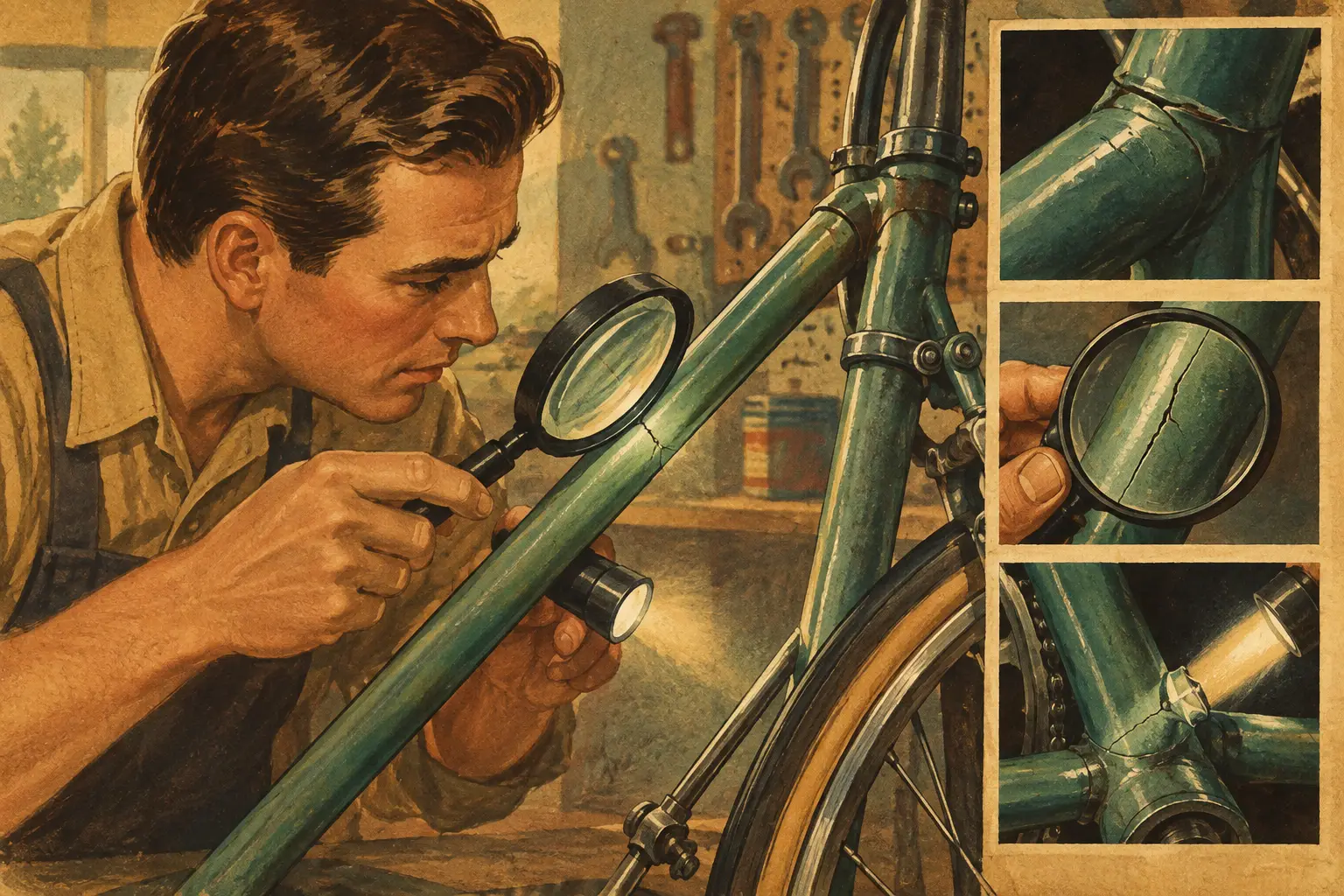
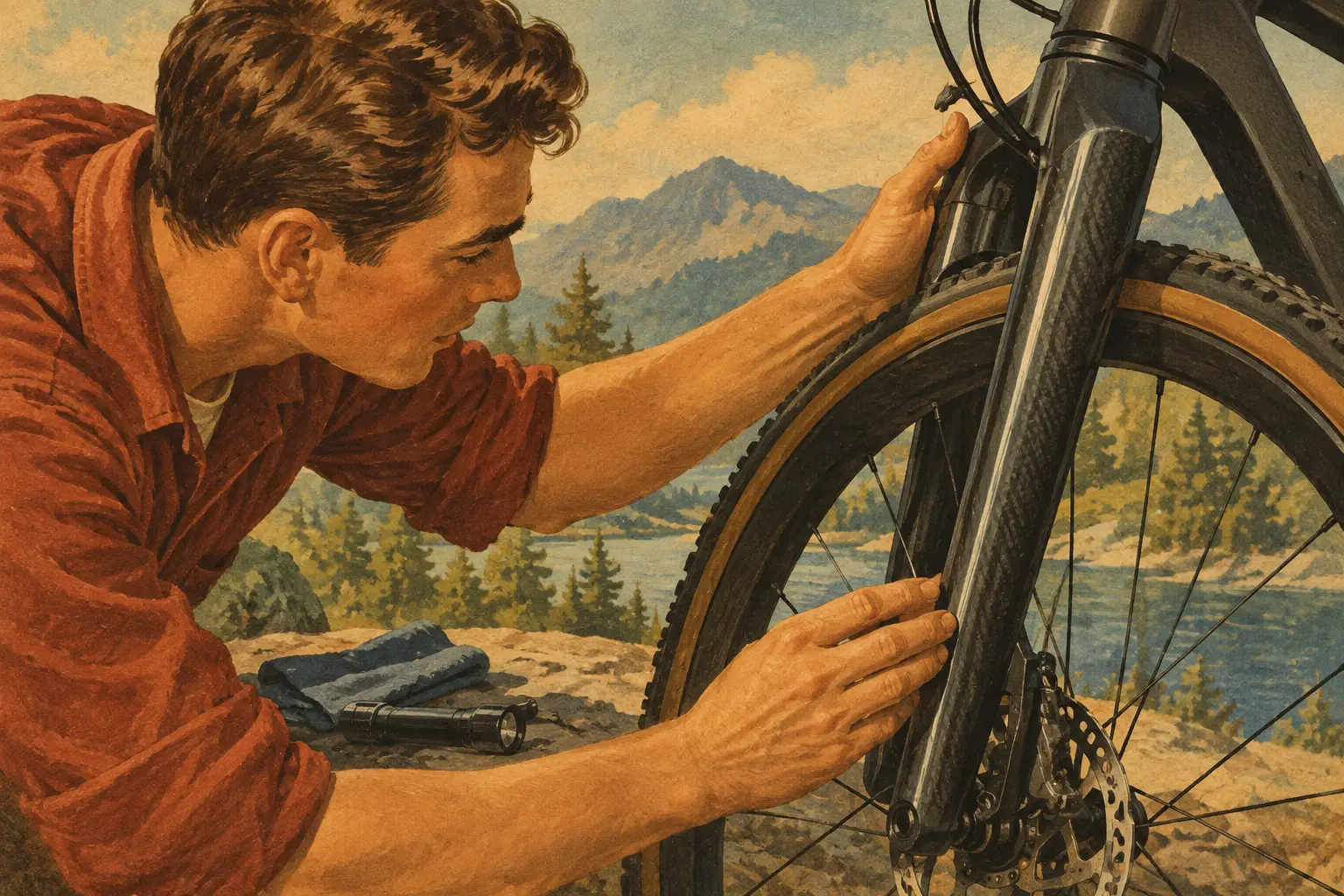
Do not continue riding simply because the wheel still turns. Remove the wheel if safe to do so and inspect the dropout faces, axle seats, hanger, axle threads and surrounding stays. Look for paint lines, exposed metal, a gap at a weld, crushed carbon, fretting marks or asymmetry between left and right sides. Avoid repeatedly tightening the axle or quick-release to compensate for movement. That can worsen damage and obscure the original evidence.
Bring the frame, fork, wheel, axle and derailleur hanger to the inspection where possible. The relationship between those parts often reveals the cause. Photographs of the incident are useful too, particularly after a crash or derailleur strike.
At Ewhurst Bikes, dropout repairs are assessed as structural engineering work: material, failure mechanism, alignment and intended use first; repair method second. The aim is not to make a damaged bike look serviceable for a fortnight. It is to give you a clear, technically grounded route back to a safe, durable machine – or the confidence to retire a frame that has reached its limit.
If the wheel no longer sits straight, stop trying to tune around it. A measured inspection now is far cheaper than a destroyed derailleur, damaged wheel or a failure far from home.

Leave A Comment