
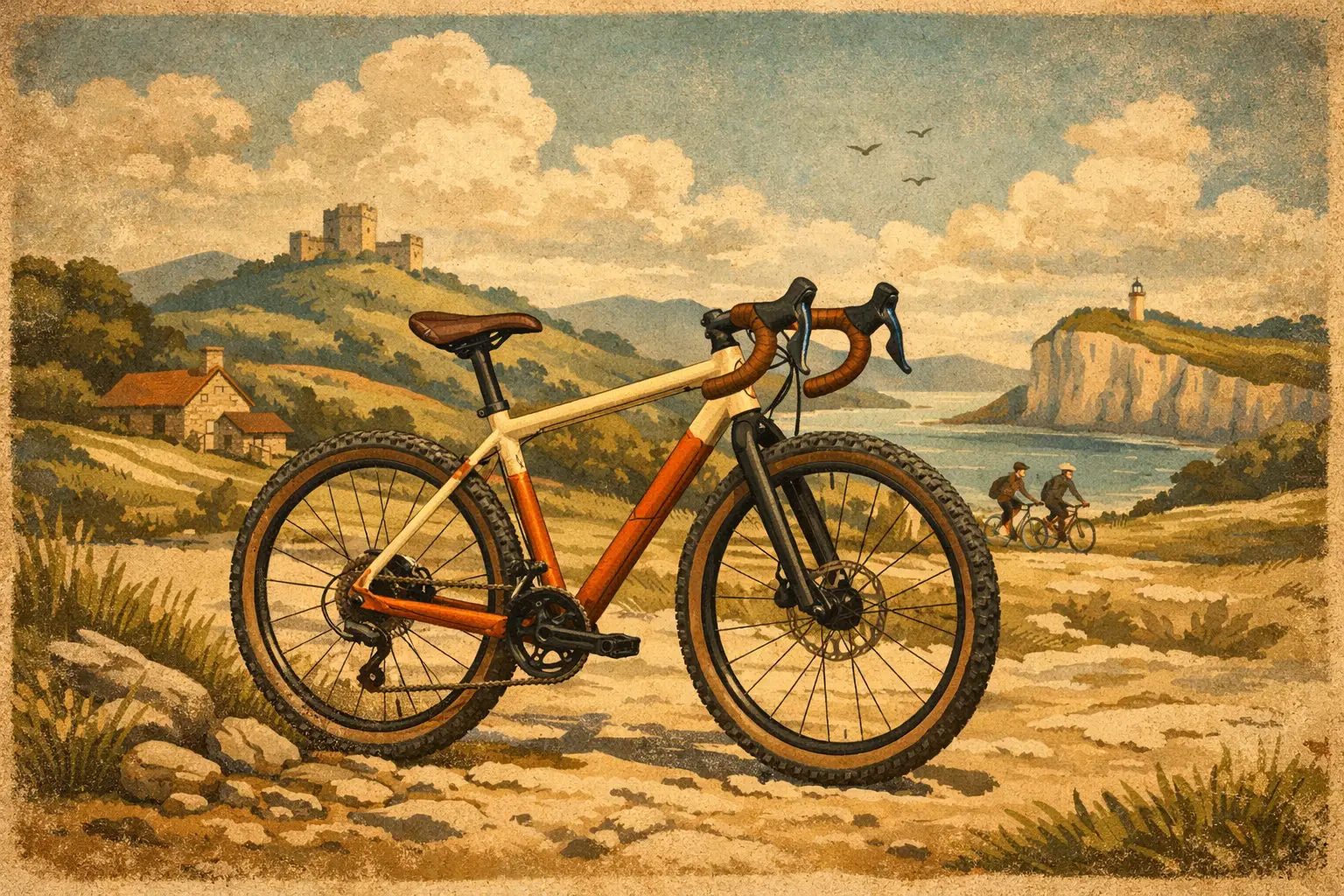
A muddy bridleway, broken farm road and three hours of wind-exposed tarmac can reveal more about a bike than a showroom test ride ever will. A custom gravel bike frame is not simply a frame painted in your preferred colour. It is a structure designed around your body, the ground you cover, the equipment you carry and the way you expect the bike to behave after several hard seasons.
For British gravel riding, that means dealing with variable surfaces, persistent wet, steep gradients, abrasive mud and the practical reality of getting home under your own power. The right frame can make a bike quicker across mixed terrain, more composed with luggage and markedly less tiring over a long day. The wrong one can leave an otherwise expensive build feeling nervous, harsh or compromised before the tyres are worn out.
Start with the riding, not the catalogue
The most useful question is not, “What is the best gravel geometry?” It is, “Where and how will this bike be ridden?” Gravel is a broad label. A rider tackling fast Northumberland forest roads, a commuter using canal paths, an ultra-distance rider carrying winter kit and a racer riding technical Yorkshire tracks may all want drop bars and wide tyres, but their frame requirements are different.
A proper design brief considers the intended terrain, typical ride duration, rider weight and position, tyre choice, luggage, desired handling and future use. A bike intended for light bikepacking needs stability under load and sufficient clearance for mudguards. A race-focused machine may prioritise responsive acceleration, efficient seated climbing and a tighter riding position. One frame rarely does every job perfectly, so the engineering process is about deciding where to place the compromises.
Fit belongs at the beginning of that process. Reach, stack, saddle setback, crank length and bar position determine how a rider loads the bike. Geometry then gives that position a stable, predictable platform. Copying the dimensions of a successful bike can be a useful reference, but it is not the same as designing around the rider. Two people of similar height can need significantly different front-end dimensions, weight distribution and bar reach.
Custom gravel bike frame geometry in practice
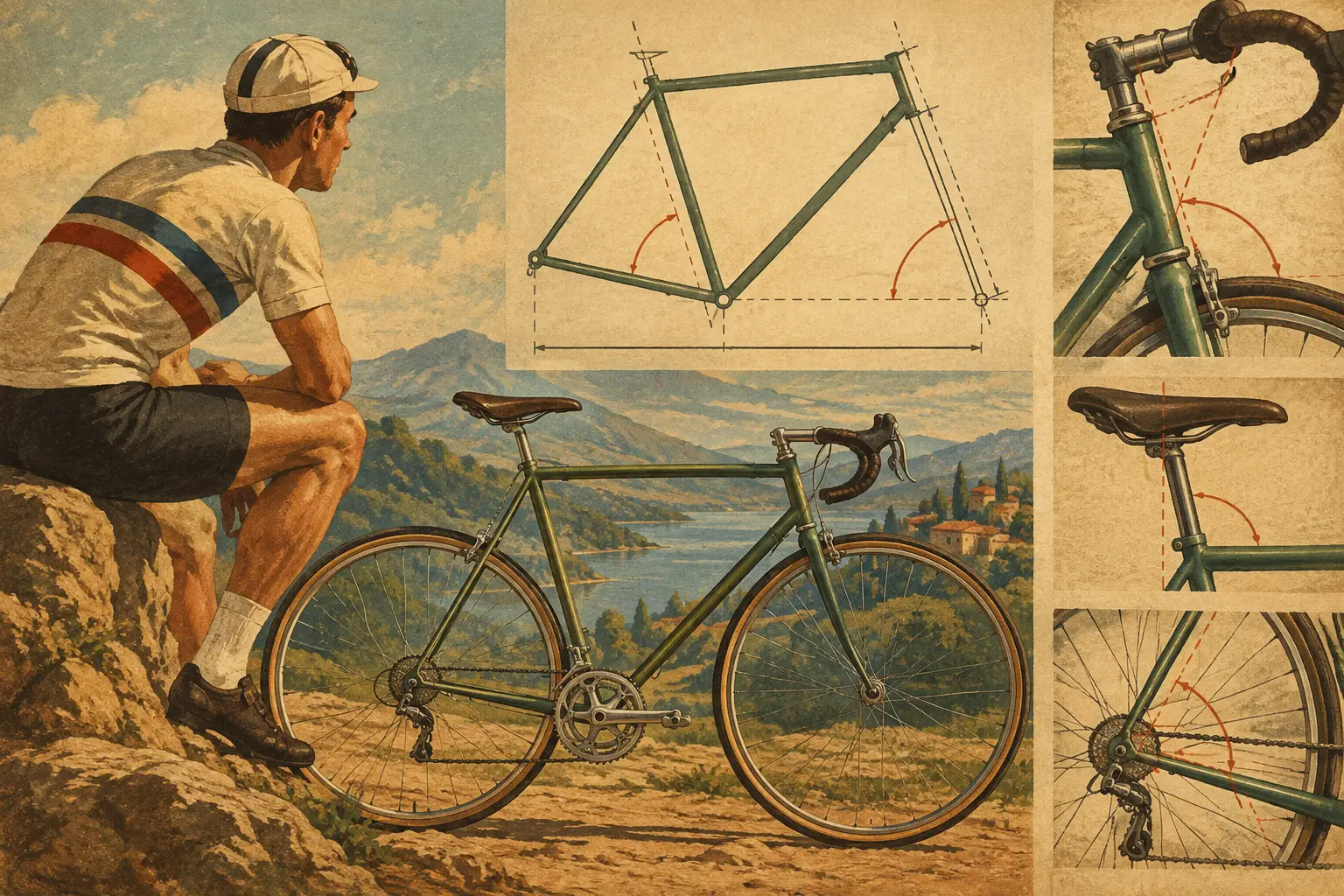
Gravel geometry is often discussed in isolated numbers, particularly head angle, trail and wheelbase. Those figures matter, but they only make sense as a system. Fork offset, tyre diameter, handlebar position, chainstay length and rider weight all influence the finished bike.
A longer wheelbase and more trail can improve confidence on loose descents and rougher tracks, especially when the bike is loaded. Taken too far, however, the steering can become slow and require more effort to hold a line on tighter roads. A shorter rear end may give the bike a more immediate feel when accelerating, but clearance for large tyres, mudguards, chainrings and heels still has to be resolved properly.
The bottom bracket is another common point of compromise. A low bottom bracket can make a bike feel planted through fast bends, yet pedal strikes become more likely on rutted bridleways and off-camber ground. More height provides clearance but can make the bike feel less settled. The appropriate answer depends on the tyres, crank length and surfaces actually used, not a fashionable geometry chart.
Front-end design deserves particular care. Too little stack forces some riders into a position that is tolerable for an hour but unsustainable for a full day. Too much reach can overload the hands and make the rider brace against every impact. The aim is not an upright bike by default. It is a position that lets the rider produce power, breathe freely, steer accurately and move around the bike when the surface turns rough.
Material is part of the design decision
Steel, titanium, aluminium and carbon each have credible applications. The best choice depends on the job, budget, repair expectations and desired ride character rather than allegiance to one material.
Steel remains a sensible choice for a hard-used gravel or touring machine. It can be selected and shaped to give an appropriate balance of stiffness and comfort, accommodates practical fabrication, and is generally straightforward to modify or repair by a competent specialist. Its penalty is weight, although frame weight alone tells little about the quality or speed of a complete bike.
Titanium offers corrosion resistance and excellent long-term durability, making it attractive for year-round riding. It can produce a light, resilient frame, but tube selection, weld quality and geometry matter far more than the badge on the down tube. Titanium is not automatically compliant, and it is not exempt from fatigue or poor design.
Aluminium can be light, efficient and cost-effective, particularly for a performance-led build. It demands careful attention to weld zones, tube profiles and fatigue life. Carbon can offer very low weight and highly targeted stiffness, but it needs a clear plan for impact protection, mounting points and inspection after crashes. For a rider who values repairability and intends to use the bike for decades, those are meaningful considerations.
A durable frame does not come from material alone. It comes from sensible load paths, sufficient clearance, accurately aligned components and details that avoid creating stress concentrations. That is why a frame should be engineered as an assembly rather than treated as a collection of fashionable specifications.
Details that determine whether the bike works
Tyre clearance must account for more than the advertised tyre width. Real tyres vary between rims, mud accumulates, and a wheel can move slightly under hard cornering or flex. A frame designed around a nominal 45 mm tyre with no practical margin may be unsuitable for a wet British winter. If mudguards are required, their stays and line also need to be considered from the outset.
Mounting provision should be purposeful. Extra bosses are useful only if they do not interfere with bottle access, bags, cables or frame integrity. A rider carrying tools and food for long-distance events may need three bottle positions, top-tube mounts and secure luggage points. Someone building a fast local gravel bike may prefer a cleaner arrangement and lower weight.
Drivetrain selection affects the frame too. Chainring size, chainline, cassette range and wheel standard influence clearance and rear-end layout. A wide-range single-ring system can be excellent for mixed terrain, but it may leave larger gaps between gears on the road. A double chainset gives closer ratios and a wider overall spread, at the expense of added complexity and potential mud sensitivity. Neither is automatically right.
Wheel choice should be included before the frame is finalised. A strong wheel with an appropriate rim width and spoke count is more valuable on rough ground than chasing the lightest possible specification. The frame’s axle standard, disc mount, rotor clearance and tyre envelope must suit the wheelset it will actually use.
Build for service, repair and the next decade
A bespoke frame should not become difficult to live with once it leaves the workshop. Standard bearings, sensible cable routing, readily available hangers and conventional hardware make future servicing easier. Internal routing may look tidy, but it should not turn routine cable replacement into an afternoon of frustration. External routing can be the better engineering solution for a wet-weather endurance bike.
It is also worth allowing for changes in the rider’s needs. An extra mounting option, clearance for sensible tyre growth or a design that accepts a different bar setup can extend the useful life of the bike. That does not mean making every frame an overloaded multi-purpose platform. It means identifying likely changes and avoiding unnecessary dead ends.
At Ewhurst Bikes, custom work starts with a direct conversation about the rider’s goals, existing equipment and the routes that expose its weaknesses. The outcome may be a made-to-order frame, a carefully specified complete build, or a modification that makes a current bike fit and function properly. A new frame is worthwhile when it solves problems that adjustment alone cannot.
A well-designed gravel bike should become unremarkable in the best way. It should track securely when fatigue sets in, leave room for mud to clear, carry what is needed and respond predictably when the surface changes without warning. Bring the real riding problem to the design stage, and the frame can be built to keep earning its place long after the latest gravel trend has passed.







Leave A Comment